
Real estate ETFs: The 4 best real estate REITs for higher returns


When you think about the property market, you probably immediately think about buying a house or flat. But what if you could benefit from the returns of the property market without owning a property yourself?
Real estate ETFs make exactly that possible! They offer you access to attractive returns without the high barriers to entry associated with direct property purchases.
In this article, you will learn why real estate index funds are an interesting alternative, how they work and which ones are the best on the market.
In brief:
- Real estate ETFs offer you access to the property market without having to purchase buildings yourself.
- REIT ETFs distribute at least 90% of their profits to investors. This means regular dividends.
- With small amounts, you can invest globally in property markets through property ETFs.
- Real estate ETFs offer broad diversification and have delivered stable returns in the past.

Points
Points

Points
Points

Points
Points
Points
Points
Points
Points
Points
Points
Points
Points
Points
Points
Points
0 % without
Points
0 % without
Points
Points
Points
Points
Points
What are real estate ETFs and why are they so attractive?
Real estate ETFs, or real estate investment trusts, are funds that are traded on the stock exchange and invest in shares of companies operating in the real estate sector.
These include property developers, housing associations and commercial property operators. The best thing about it is that you can invest in the property market with small amounts of money without having to worry about purchasing, managing or maintaining buildings yourself.
This form of investment is particularly attractive for private investors who want to invest in buildings but do not have the financial resources or desire to purchase an entire property.
Compared to buying property directly, property ETFs offer many advantages: they are liquid, flexible and allow you to invest in different types of property such as office buildings, shopping centres, hospitals or logistics centres.
Risk diversification is broader than with a single property, as an ETF often invests in dozens, if not hundreds, of property companies.
The chart compares the iShares Core S&P 500 UCITS ETF (blue) with the iShares Developed Markets Property Yield UCITS ETF (red). The S&P 500 ETF shows a significantly higher return, but also greater volatility in the period from 2021 to 2024.
In contrast, the real estate ETF is less susceptible to fluctuations, making it more stable but less growth-oriented. Overall, the real estate ETF offers greater stability, while the S&P 500 ETF offers higher return opportunities for risk-tolerant investors.
The iShares Developed Markets Property Yield ETF generally has a higher dividend yield due to its real estate holdings. The iShares Core S&P 500 UCITS ETF offers lower dividends but focuses more on growth.
One particularly exciting aspect is REITs (Real Estate Investment Trusts), which often form the basis of many property index funds. REITs are legally required to distribute at least 90% of their profits to investors, which results in regular and often very attractive dividends.
This makes property ETFs a solid source of passive income, which makes them attractive to both experienced and new investors. Property ETFs are therefore more than just an attractive investment opportunity; they are a convenient way to participate in the property market without having to take on the challenges of being a property owner.

If you have never invested in ETFs before, you should read the article on buying ETFs for beginners. There you will learn how to get started, what basic steps you should take and how to find the right ETF for your needs.

Investments always involve the risk of loss. The value of your investments
can go up or down. The forecast or past performance is no guarantee or
prediction of future results.
Do your own research or seek financial advice before making any invest-
ments. The WELCOME promotion is subject to Terms and Conditions. Gift
Shares are allocated randomly from a selection of eligible stocks, with high-
er-value shares awarded less frequently.
Attractive future prospects for investors
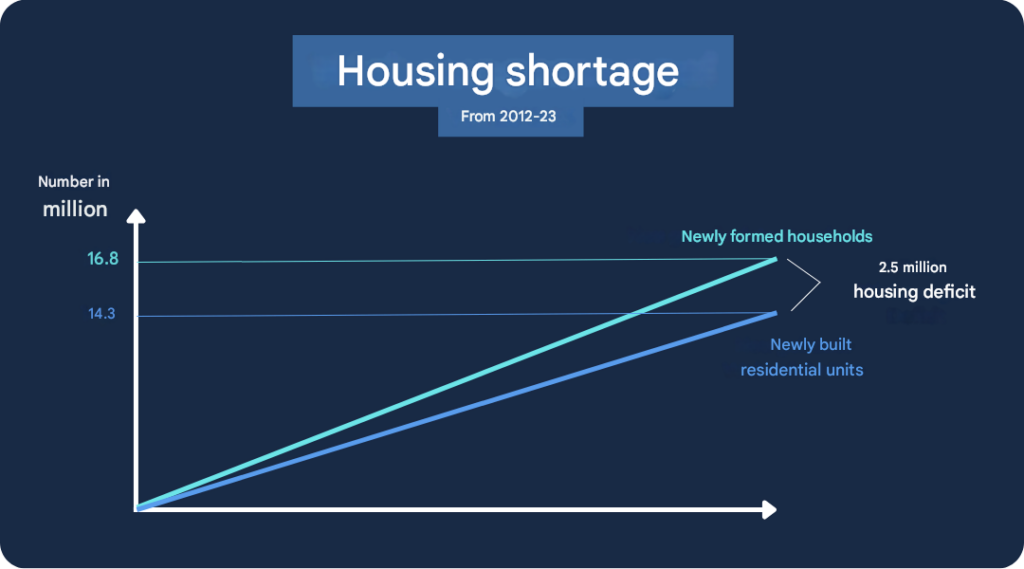
Between 2012 and 2023, there were approximately 1.4 million newly formed households each year, while only 1.2 million new residential units were built on average per year during the same period.
This backlog in construction activity has led to a growing housing shortage. By 2023, the shortfall in needed housing units was estimated at around 2.5 million, further increasing pressure on the rental and property markets.
Furthermore, the lack of affordable housing has exacerbated the problem. In urban areas and conurbations in particular, demand for housing remains high due to high levels of immigration and the decline in affordable rental properties. This is leading to further increases in rents.
Current data from Apartment List shows that rents in the United States are rising at very different rates depending on the region. The Midwest and Northeast in particular are seeing the highest rent increases.
Cities such as Cleveland, Chicago, New York City and Boston are leading the way here. Cleveland tops the list of metropolitan areas with the fastest rental growth, followed by Chicago. Even in New York City, where rents are already high, the increase continues.
These cities are experiencing steadily growing demand for rental apartments, which supply cannot meet. In Cleveland and Tulsa in particular, rents rose by more than 5 per cent last year.
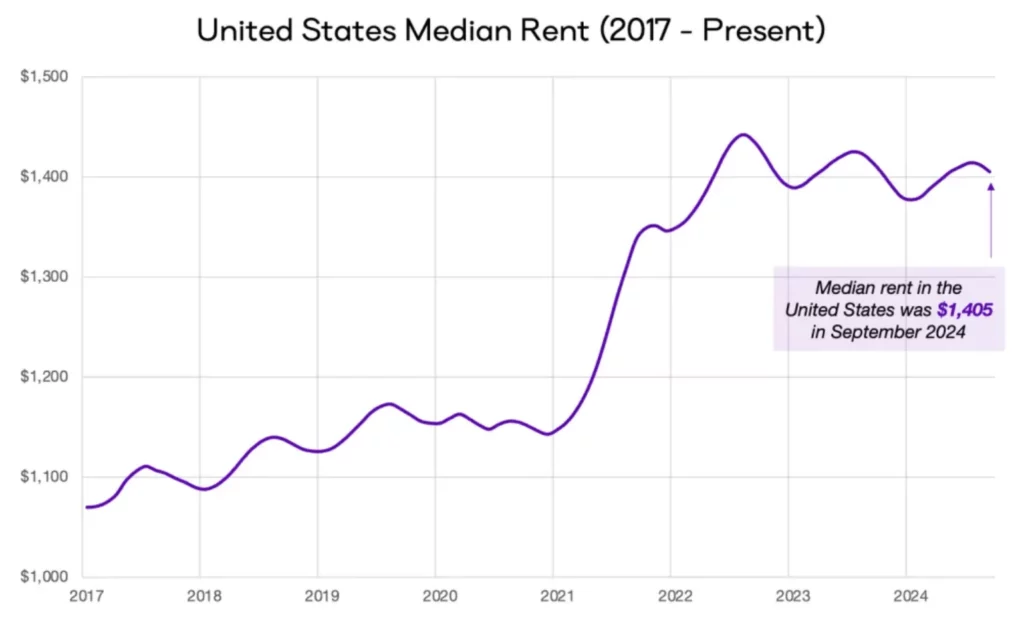
The described increase in rents is particularly lucrative for investors in the real estate sector. High rental income provides a stable and continuous source of income.
Added to this are rising construction costs and high interest rates, which are deterring many people from buying their own property. Instead, they are increasingly turning to rented accommodation.
This puts additional pressure on the rental market, which in turn increases the attractiveness of real estate investments. As more and more people will be renting long-term, the demand for rental properties is assured, and property owners can benefit from stable and growing rental income in the long term.
This presents a long-term opportunity for investors, as the market for rental properties will continue to flourish in the future due to these developments. Even in times of economic uncertainty, real estate is a comparatively safe and inflation-proof investment that can deliver continuous returns.
In addition, population growth in the United States shows a continuous upward trend, underscoring the rising demand for housing. According to the 2020 census, the population of the United States has grown from around 308.7 million to 331,449,281 in ten years, representing a 7.4% increase since 2010.
The total population of the United States is projected to be approximately 345.4 million people in 2025.
Good to know:
If you are interested in alternative property investments, EstateGuru could be an exciting platform for you. Learn more about the platform and user experiences in the article on EstateGuru experiences to better understand how you can benefit from property crowd investing.
Further reasons why real estate ETFs are so attractive
Investing in real estate ETFs offers many other advantages besides promising future prospects, which are attractive to various types of investors.
Real estate is considered a relatively safe and stable form of investment, as it has historically been less volatile than other asset classes such as equities. Real estate ETFs offer you an opportunity to benefit from this stability without having to purchase a single, expensive property and thereby exposing yourself to cluster risk.
Good to know:
Concentration risk describes the risk that arises when an investor invests too heavily in a single asset class, a specific company or an industry. This makes the portfolio less diversified and highly dependent on the performance of this one area.
Another major advantage is liquidity: while it can take years to sell your property at a profit when buying directly, you can trade your shares in a property ETF on the stock exchange at any time.
Another significant advantage is the diversification offered by real estate ETFs. Instead of investing all your capital in one property, you can use real estate ETFs to invest in a variety of real estate projects worldwide.
Whether office buildings in New York, shopping centres in Europe or logistics centres in Asia: real estate ETFs give you access to a global real estate portfolio. This broad diversification helps to minimise risk, as you are not dependent on the performance of a single property or region.
Furthermore, property index funds are often cheaper than buying property directly. You don’t need start-up capital of several hundred thousand euros to get started.
You can often start with just a few hundred euros. The low fees associated with real estate index funds are another advantage. Unlike real estate funds, which often incur high management fees, real estate ETFs are passively managed and therefore significantly less expensive.
- Secure and stable form of investment: Historically, real estate properties are considered less volatile than shares and offer stability.
- Avoiding concentration risk: Property index funds reduce the risk associated with concentrating on a single asset class.
- High liquidity: Real estate ETFs can be traded on the stock exchange at any time, unlike direct real estate purchases.
- Broad diversification: With real estate ETFs, you can invest in various real estate projects worldwide, which minimises risk.
- Lower entry costs: Unlike buying property directly, you can invest in ETFs with just a few hundred euros.
- Lower fees: Real estate ETFs are passively managed, which makes them less expensive than actively managed real estate funds.
REITs – The driving force behind real estate ETFs
There are various types of REITs (Real Estate Investment Trusts), all of which generate income for their investors in different ways. The most important ones include equity REITs, mortgage REITs and hybrid REITs.
Each of these REIT types has its own strategy for generating income through property or mortgages. It is important to understand these differences if you want to invest in REIT-based property ETFs, as they have different implications for risk and return.
Equity REITs
Equity REITs are the most common type and dominate the majority of REIT-based index funds. These REITs acquire and manage physical properties, which they lease out to generate income. The properties range from residential buildings and office buildings to shopping centres and hospitals.
The income comes mainly from the rental income from these properties, which makes equity REITs a stable source of income for investors. As property values often rise over the long term, investors also benefit from the potential increase in value of the properties themselves. Equity REITs are therefore considered relatively safe and are well suited to investors who are looking for steady returns from rents and capital gains.
Mortgage REITs
Mortgage REITs (or mREITs), on the other hand, earn money by financing properties rather than owning them directly. These REITs lend capital to property owners or mortgage borrowers and thus generate their income from the interest on these loans. Mortgage REITs often offer higher returns than equity REITs, as they benefit from interest rate differentials between the borrowed and lent funds.
However, they are also riskier, as they are heavily dependent on interest rates and the solvency of borrowers. Mortgage REITs can therefore be volatile during periods of rising interest rates or economic instability.
Investments always involve the risk of loss. The value of your investments
can go up or down. The forecast or past performance is no guarantee or
prediction of future results.
Do your own research or seek financial advice before making any invest-
ments. The WELCOME promotion is subject to Terms and Conditions. Gift
Shares are allocated randomly from a selection of eligible stocks, with high-
er-value shares awarded less frequently.
Hybrid REITs
Hybrid REITs combine the advantages of equity and mortgage REITs by investing in real estate and lending capital to borrowers. They generate income from rents and interest on mortgages, making them a balanced investment option.
Hybrid REITs often offer a diversified source of income and can help spread risk, as they benefit from both stable rental income and interest income.
When investing in REIT ETFs, you should therefore understand what types of REITs the ETF covers, as this can have a significant impact on the stability and potential returns of your investment.
Equity REITs are ideal for investors seeking long-term stability, while mortgage REITs offer higher but riskier returns. Hybrid REITs are an attractive solution for investors who want to combine both strategies to benefit from different income streams.

Good to know:
If you are looking for regular dividends, REITs could be just right for you. REIT ETFs, which invest exclusively in REITs and thus offer a reliable source of income, are particularly popular.
The 4 best real estate ETFs in a comprehensive comparison
There are many real estate ETFs on the market, but which one is right for you? Each of these ETFs has its own characteristics in terms of costs, regions in which it invests and dividend yields. Below you will find a detailed overview of the four best ETFs. We have also highlighted the most important top holdings of these ETFs to give you even more insight.
| ETF | Region | Costs (TER) | Dividend yield | Volume (million €) | Key areas | Distribution |
| iShares Developed Markets Property Yield | Global | 0,59 % | 3,2 % | 2.500 | Residential and commercial properties | Quarterly |
| SPDR Dow Jones Global Real Estate | USA | 0,40 % | 3,5 % | 3.200 | Commercial real estate, REITs | Half-yearly |
| VanEck Vectors Global Real Estate | Global (United States, Japan) | 0,25 % | 2,8 % | 1.800 | Office buildings, shopping centres | Annually |
| HSBC FTSE EPRA NAREIT Developed | Europe, Asia | 0,24 % | 3,1 % | 900 | Commercial and residential properties | Quarterly |
Good to know:
If you are looking for an ETF with high dividends, the SPDR Dow Jones Global Real Estate ETF could be the right choice for you. With a dividend yield of 3.5%, it offers regular income and broad diversification.
1. iShares Developed Markets Property Yield UCITS ETF
- Region: Global (United States, Europe, Asia)
- Costs (TER): 0.59%
- Dividend yield: 3.2%
- Volume: €2,500 million
- Distribution: Quarterly
This ETF invests in real estate companies worldwide, with a focus on developed markets. It offers a solid dividend yield of 3.2%, making it ideal for investors who want to generate regular income from their investments.
Top-Holdings:
- Prologis, Inc. – 7,17 %
- Welltower, Inc. – 4,33 %
- Public Storage – 3,30 %
- Simon Property Group, Inc. – 3,28 %
- Realty Income Corp – 3,25 %
2. SPDR Dow Jones Global Real Estate UCITS ETF
- Region: United States
- Costs (TER): 0.40%
- Dividend yield: 3.5%
- Volume: €3,200 million
- Distribution: Half-yearly
This ETF invests heavily in the US property market and offers an above-average dividend yield of 3.5%. The focus is on commercial property and REITs, which guarantee stable and regular returns.
Top-Holdings:
- Prologis, Inc. – 7,84 %
- Equinix – 5,24 %
- Welltower – 4,77 %
- Simon Property Group, Inc. – 3,61 %
- Public Storage – 3,59 %
3. VanEck Vectors Global Real Estate UCITS ETF
- Region: Global (United States, Japan)
- Costs (TER): 0.25%
- Dividend yield: 2.8%
- Volume: €1,800 million
- Distribution: Annually
This ETF offers a particularly low expense ratio of 0.25% and invests in a broadly diversified portfolio of real estate companies from the United States and Japan. The focus is on office buildings and shopping centres.
Top-Holdings:
- Prologis, Inc. – 6,5 %
- Equinix – 4,68 %
- Welltower – 4,3 %
- Public Storage – 3,21 %
- Simon Property Group, Inc. – 3,05 %
4. HSBC FTSE EPRA NAREIT Developed UCITS ETF
- Region: Europe, Asia
- Costs (TER): 0.24%
- Dividend yield: 3.1%
- Volume: €900 million
- Distribution: Quarterly
This ETF focuses on real estate markets in Europe and Asia. It offers an attractive dividend yield and low management fees. The quarterly distributions make it particularly interesting for investors who want regular income.
Top-Holdings:
- Unibail-Rodamco-Westfield – 5,35 %
- Vonovia – 4,98 %
- Segro Plc – 4,12 %
- Japan Real Estate Investment – 3,87 %
- Mitsui Fudosan Co., Ltd. – 3,2 %
Good to know:
If you are considering expanding your portfolio with high-growth markets, you should consider an ETF on emerging markets. In the article on the best emerging market ETFs, you will find a detailed overview of the best options for profiting from emerging markets and making the right choice for your investment strategy.
US and German REIT ETFs compared – which is better for you?
A look at the difference between US and German REITs reveals some interesting differences.
REITs have been established for much longer in the US, and the selection of REITs is significantly larger. US REITs often offer higher dividends because they invest in rapidly growing property markets.
These include shopping centres, hospitals and hotels. German REITs, on the other hand, are more heavily regulated and focus on residential and commercial properties.
Advantages of US REIT ETFs:
- Higher dividend yields (up to 5%).
- Strong performance thanks to growth sectors such as logistics centres and data centres.
- Broader selection of REITs investing in different types of property.
Advantages of German REIT ETFs:
- More stable returns thanks to tighter regulation.
- Focus on residential and commercial property, which is less affected by economic fluctuations.
- Attractive tax conditions for German investors.
If you are seeking higher returns and are prepared to take on greater risk, US REIT index funds may be the better choice. German REIT ETFs, on the other hand, offer greater stability and security.
Investments always involve the risk of loss. The value of your investments
can go up or down. The forecast or past performance is no guarantee or
prediction of future results.
Do your own research or seek financial advice before making any invest-
ments. The WELCOME promotion is subject to Terms and Conditions. Gift
Shares are allocated randomly from a selection of eligible stocks, with high-
er-value shares awarded less frequently.
Risks of real estate ETFs
Like any investment, property ETFs also carry certain risks. A significant disadvantage is their dependence on the property market. If the property market weakens, the prices of property ETFs can fall sharply.
Interest rate hikes also have a negative impact on real estate ETFs, as higher interest rates drive up the cost of real estate financing and reduce the profit margins of real estate companies.
Risks of real estate ETFs:
- Interest rate rises: Rising interest rates lead to higher financing costs for real estate companies, which can squeeze their profits and thus also their dividends.
- Market risks: The property market can fluctuate significantly. The property sector has suffered heavy losses, particularly in times of crisis, such as during the financial crisis of 2008.
- Credit defaults: REITs in particular are exposed to the risk that rental defaults or vacancies will reduce income.
Nevertheless, real estate index funds offer enormous opportunities, especially if you are thinking long term. Thanks to broad diversification and relatively stable dividends, you can benefit from a global real estate portfolio without bearing the risks of directly purchasing properties.
Good to know:
Accumulating ETFs are also a good option, as they automatically reinvest the income. In the article on accumulating ETFs, you can find out how this type of ETF works and what advantages and disadvantages it offers for different types of investors.
In addition to traditional REIT ETFs, there are also exciting individual stocks in the real estate sector that are of interest to long-term investors.
These shares not only offer stable returns, but also regular and often attractive dividends. A good example of this is Realty Income, which has established itself as ‘The Monthly Dividend Company’.
This company pays dividends monthly and owns over 6,500 properties, mainly in the commercial and retail sectors.
Thanks to long-term leases and tenants with strong credit ratings, Realty Income offers a high degree of stability and reliability for investors who rely on continuous income.
Tanger Factory Outlet Centres is another interesting real estate stock that specialises in operating outlet centres.
With over 30 outlet centres in the United States and Canada, Tanger offers investors an opportunity to invest in retail, which remains relatively stable even in difficult economic times. Thanks to stable cash flows and an attractive dividend yield of 5.1%, Tanger is particularly attractive to income investors.
Another big name in the real estate sector is Realty Property Trust, which also focuses heavily on the retail sector. The company pursues a conservative financial strategy and attaches great importance to long-term leases.
This conservative approach provides stable income streams and rising dividends, making Realty Property Trust a popular choice for security-oriented investors.
LTC Properties, which specialises in retirement homes and healthcare properties, offers a very interesting alternative. LTC Properties is benefiting from the rising demand for care properties and offers an impressive dividend yield of 6.1%.
By focusing on the healthcare sector, LTC offers an attractive combination of stability and high returns.
| Company | Focus | Dividend yield | Special feature |
| Realty Income | Commercial property, retail | 4,2 % | Monthly dividend payments, high stability thanks to long-term rental agreements |
| Tanger Factory Outlet | Outlet centres | 5,1 % | Focus on outlet centres, stable in weaker economic times |
| Realty Property Trust | Retail properties | 4,3 % | Conservative financial strategy, long-term leases, rising dividends |
| LTC Properties | Retirement homes, healthcare properties | 6,1 % | Focus on healthcare and nursing homes, attractive dividend yield |
These shares offer you an excellent opportunity to invest in specific segments of the property market while benefiting from attractive dividends. Realty Income, Tanger, Realty Property Trust and LTC Properties are exciting alternatives to traditional property ETFs, especially if you are looking for regular income and want to cover different areas of the property market.
Good to know:
If you find monthly dividend payments exciting, Realty Income shares could be an attractive addition to your portfolio.
Conclusion: Are real estate ETFs also your smart way into the property market?
Real estate index funds offer an attractive opportunity to profit from the global real estate market without having to purchase properties yourself.
They are liquid, flexible and offer you regular dividends, especially if you invest in REIT ETFs. For investors looking for passive income and long-term wealth accumulation, real estate ETFs are an excellent alternative to direct real estate investments.
Whether you want to invest in the United States, Germany or globally, there are numerous opportunities to achieve stable returns with real estate ETFs.
Points
Points
Points
Points
Points
Points
Points
Points
Points
Points
Points
Points
Points
Points
Points
Points
Points
0 % without
Points
0 % without
Points
Points
Points
Points
Points
FAQ – Frequently asked questions about real estate ETFs

