


Investing in times of rising inflation is a concern for many investors. Most investors are grappling with a key challenge: how can they protect their hard-earned money from creeping depreciation whilst still achieving a reasonable return? The question of how best to invest is becoming ever more pressing and complex. For whilst inflation erodes the value of assets, it also presents opportunities for those who invest wisely.
In brief:
- The inflation rate, excluding energy, stood at +2.7% in March 2024.
- ETFs and P2P loans are regarded as excellent investment options in times of inflation.
- Diversify your portfolio across different asset classes to spread risk and minimise potential losses.
In this article, we examine the impact of inflation on wealth and present strategies and investment opportunities for achieving financial goals. Given the uncertain economic climate and volatile markets, a sound understanding of investment strategies and prudent portfolio diversification are crucial.
We examine various forms of investment, ranging from traditional to innovative options such as peer-to-peer (P2P) lending, ETFs and precious metals, to help you make informed decisions and understand both returns and risks. Whether you’re an experienced investor or a beginner, this article offers a comprehensive guide to investing in times of inflation.

Investing wisely despite inflation: The 5 best strategies and investment opportunities
Tackling the challenges associated with a high-inflation economy requires a sound understanding of the various investment strategies and instruments. Below are some key considerations that you, as an investor, should bear in mind in order to invest successfully even in times of high inflation:
A long-term perspective and patience
Investors should adopt a long-term perspective and exercise patience, as historical data shows that the long-term performance of asset classes such as shares and property is often positive, despite short-term fluctuations. It is important for investors to take a long-term view of their investments and not to react to short-term volatility.
Diversification and risk spreading
Broad diversification of the portfolio is crucial for protecting against the effects of inflation. Investors should spread their capital across various asset classes, such as shares, bonds, commodities and property, in order to spread the risk and offset potential losses in any one asset class. By adopting a diversified investment strategy, investors can make their portfolio more resilient to market fluctuations.
Inflation-protected investments and alternative investments
Investors should specifically look for investment instruments that offer a certain degree of protection against inflation. These include inflation-linked bonds, property investments, commodities and inflation-resistant shares.
Property investments, for example, offer not only the potential for capital appreciation but also a regular income in the form of rental income. And inflation-resistant shares are shares in companies whose profits and dividends are less affected by inflation.
Regular review and adjustment of the investment strategy
Given the dynamic nature of the economy and the financial markets, it is important to review your portfolio regularly and adjust it where necessary. Investors should adapt their investment strategy and positions to changing market conditions and inflation rates to ensure that their portfolio is optimally positioned. Regular review can help to identify opportunities and minimise risks.
Professional advice and ongoing training
Finally, it may be wise to seek professional advice from financial experts, particularly in times of economic uncertainty and high inflation. An experienced financial adviser can help investors define their goals, develop a suitable investment strategy and select the right investment instruments to achieve their financial objectives. Furthermore, ongoing education about financial markets and investment strategies is crucial to making well-informed investment decisions.
By adopting a comprehensive and forward-looking investment strategy, investors can invest successfully even in times of high inflation and protect and grow their wealth in the long term. It is important to take individual needs, goals and risk tolerance into account and, where appropriate, seek professional advice in order to develop an optimal investment strategy.
P2P lending in times of high inflation
P2P lending, also known as peer-to-peer loans, have become an increasingly popular alternative in the financial market in recent years. Particularly in times of high inflation, they offer investors attractive opportunities to achieve solid returns whilst avoiding the risks associated with traditional banking products. But how exactly do P2P loans work, and what are the associated advantages and disadvantages?
P2P lending enables individuals and businesses to lend money directly to other individuals or businesses without having to rely on a traditional bank as an intermediary.
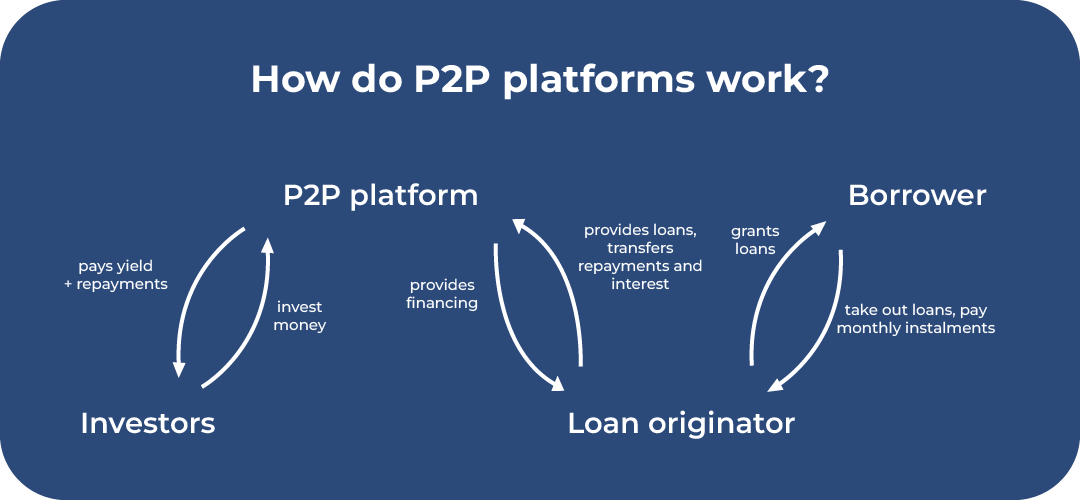
This is done via specialised online platforms that connect borrowers and lenders. For investors, P2P loans often offer attractive interest rates that exceed those of traditional savings products. Particularly in times of high inflation, these returns can help to offset the loss in value of the currency and preserve the purchasing power of the capital invested.
Despite their appeal, however, P2P loans are not without risks. The risk of borrower default, in particular, can significantly affect returns. It is therefore crucial to carry out thorough research before investing and to carefully assess both the platforms and the creditworthiness of potential borrowers. Diversifying the capital invested across several loans can also help to spread the risk and minimise potential losses.

However, P2P lending offer an interesting way to invest money and achieve attractive returns, particularly in times of high inflation. With the right strategy and a sound understanding of the underlying risks, P2P loans can be a valuable addition to any investment portfolio.
Good to know:
Use P2P lending as an alternative in the financial market to achieve attractive returns even in times of high inflation and to avoid the risks associated with traditional banking products.
Investing and inflation: ETFs are a crisis-proof investment
Exchange-traded funds (ETFs) have established themselves as an extremely popular form of investment in recent years. This is particularly true for investors seeking a crisis-proof option. ETFs offer a wide variety of investment options, ranging from global equity indices to commodities and bonds. But what exactly are ETFs, and why are they considered particularly resilient in times of economic turmoil?
ETFs are investment funds that are traded on stock exchanges in the same way as shares. They track an index, such as the DAX or the S&P 500. This enables investors to invest in a market or sector with broad diversification. This broad diversification reduces the specific risk associated with individual shares and makes ETFs a stable investment option, even during periods of market volatility. The flexibility and liquidity offered by ETFs make them an attractive choice for investors who wish to react quickly to market changes in uncertain times.
A key advantage of ETFs is their transparency and liquidity. As they are traded on the stock exchange, investors can buy or sell their units at any time, enabling them to react quickly to market changes. This is particularly advantageous during periods of market turbulence, as investors can respond flexibly to changing conditions without having to worry about long selling times or high fees. ETFs therefore offer high tradability and broad market coverage, which further enhances their appeal to investors.
Another reason why ETFs are regarded as a crisis-proof investment is their cost structure. Compared with actively managed funds, ETFs generally have lower management fees as they passively track an index. This leads to better returns for investors, particularly in the long term. Thanks to their broad diversification and cost-effective structure, ETFs offer an attractive way to spread risk and support long-term wealth accumulation.
However, despite their advantages, ETFs are not entirely immune to risks. Market fluctuations can affect an ETF’s performance, particularly during periods of economic turbulence or crisis. It is therefore important to select ETFs carefully and to diversify the portfolio accordingly in order to spread the risk. A thorough understanding of the markets and a long-term investment strategy are crucial to success when investing in ETFs.
The 5 strongest arguments in favour of ETFs:
- Popularity: Globally, assets under management in ETFs stood at over 9 trillion US dollars at the end of 2023 and continue to grow strongly.
- Cost-effectiveness: The average annual expense ratio for ETFs is often less than 0.5 per cent, compared with an average of over 1 per cent for actively managed funds.
- Liquidity: ETFs often offer high liquidity, with average daily trading volumes running into several billion US dollars in the US alone.
- Diversification: A single ETF can contain hundreds or even thousands of shares or bonds, enabling broad diversification with relatively small investment amounts.
- Performance: Over longer periods, many ETFs have delivered solid returns that are comparable to, or exceed, those of traditional funds.
In summary, investing in ETFs offers an attractive way to invest your assets in a crisis-proof manner and to benefit from long-term market trends. With their broad diversification, transparency and low-cost structure, they are a valuable addition to any investment portfolio.
Gold and other precious metals
Throughout history, gold and other precious metals have played an undeniable role as a reliable hedge against economic turmoil and inflation. Their fascinating appeal in times of increasing currency devaluation makes them appear to be timeless assets that offer investors stability and the preservation of value. But what makes these precious metals so special, and why are they so sought-after in times of economic uncertainty?
Gold, arguably the best-known precious metal, has always held an undeniable appeal for people. Its lustrous appearance and rarity lend it a special value that has endured over the centuries. As a currency and a store of value, gold has a long history dating back to ancient times. In times of economic instability and rising prices, investors often turn to the safe haven of gold to protect their wealth and hedge against the effects of inflation.
However, gold is not the only precious metal that can offer investors protection against the effects of inflation. Silver, often referred to as ‘the common man’s gold’, also has a long history as a store of value. With its wide range of industrial applications and lower price per ounce, silver offers a cost-effective way to benefit from the advantages of precious metals.
Platinum and palladium, two other important precious metals, are used primarily in industry, particularly in the automotive and jewellery sectors. Their limited availability and valuable properties make them attractive investments in times of high inflation.
Investors have various options for investing in precious metals. Physical gold and silver can be purchased in the form of coins, bars or jewellery and offer a tangible hedge against inflation.
Furthermore, exchange-traded funds (ETFs) and gold funds enable investors to invest indirectly in precious metals without owning the physical metal. These investment instruments offer broad diversification and liquidity, making them particularly attractive to investors who wish to benefit from the advantages of precious metals without having to bear the associated storage and insurance costs.
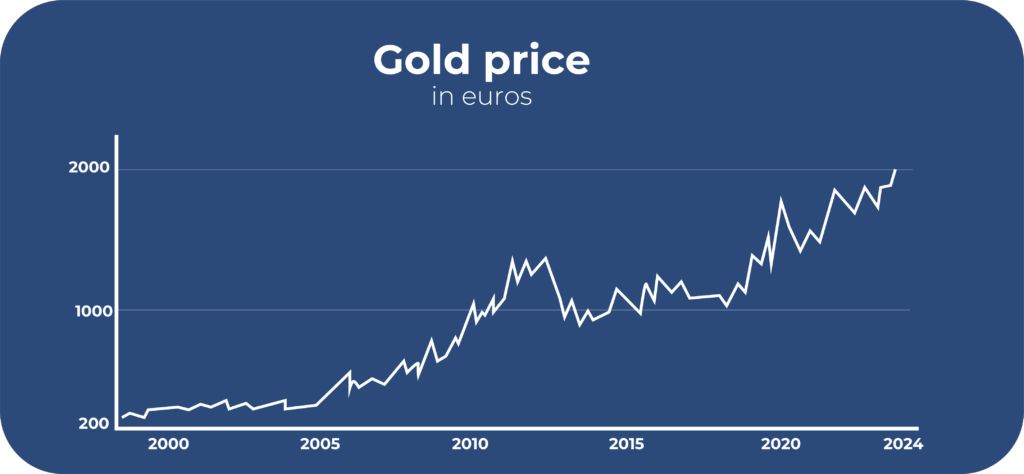
It is important to note that precious metals such as gold and silver also carry risks. Their prices can be volatile and are subject to market fluctuations as well as supply and demand factors. Furthermore, holding physical precious metals can incur storage and insurance costs, which may erode returns. Nevertheless, gold and other precious metals offer an attractive way to protect against the effects of inflation and preserve wealth in the long term.
For investors seeking stability and capital preservation, gold and other precious metals can be a valuable addition to any investment portfolio. Their intrinsic stability of value and historical role as safe havens make them attractive investments in times of economic uncertainty and rising prices. Through a prudent and diversified investment strategy, investors can protect their portfolio against the effects of inflation and support long-term wealth accumulation.
By the way: do you know which broker is best for you yet? Use our article ‘Scalable Capital vs. Trade Republic’ to help you choose the right provider.
Inflation-linked bonds
Inflation-linked bonds, also known as inflation-indexed bonds, are a specific type of investment instrument that offer a unique way of hedging against the effects of inflation. Unlike conventional bonds, the interest payments and/or the face value of these bonds are linked to a country’s inflation rate. In other words, when inflation rises, so do the interest payments and the face value of the bond, and vice versa.
For investors, inflation-linked bonds offer several attractive features. One of the main advantages is their inherent protection against a loss of purchasing power. In times of rising prices, these bonds retain their real value, as the interest rates and/or the face value rise in line with inflation. This means that, despite rising prices, investors can expect a constant or even rising return, making them an attractive option in a high-inflation environment.
Another advantage of inflation-linked bonds is their relative stability compared with conventional bonds. As their yields are linked to inflation, they are less susceptible to interest rate fluctuations and credit risks. This makes them a conservative investment option for investors seeking a safe investment to diversify their portfolio whilst achieving long-term growth.
However, it is important to note that inflation-linked bonds also carry certain risks. Potential risks include interest rate risk, credit risk and liquidity risk. This means that the yields and value of these bonds may change under certain market conditions, which could result in potential losses for investors.
Despite these potential risks, inflation-linked bonds can be a valuable addition to any investment portfolio. With their unique link to the inflation rate, they offer investors a way to protect themselves against a loss of purchasing power and to generate regular income. By carefully selecting and diversifying their bonds, investors can spread the risk and make their portfolio more resilient to the effects of inflation.
Would you like to find out about even more investment opportunities? Then be sure to read our article on the 10 best investments.

Conclusion: Secure your financial future now – investing in times of inflation
In the face of rising inflation, finding the right investment is a key challenge for many investors. However, this period presents not only risks but also opportunities for savvy investors. This comprehensive article has examined various investment options and strategies to help investors protect themselves against the effects of inflation and foster long-term growth.
A range of investment opportunities was presented in order to offer investors a wide choice. Both potential returns and the associated risks and challenges were highlighted to enable informed decision-making.
It is important for investors to adopt a long-term perspective, diversify their portfolio and, where appropriate, seek professional advice in order to achieve their financial goals. By carefully selecting and regularly reviewing their investment strategy, investors can invest successfully even in times of high inflation and build wealth over the long term.
It’s now up to you to choose the best investment for you at the moment. Find out more here.
FAQ – Frequently asked questions

