

Gold has been an established investment for thousands of years and remains a popular choice for many investment portfolios today. It is particularly renowned for its security and as a crisis-resistant investment during difficult economic times. Diversification is also often a reason for investing in gold. But is it still worth investing in gold today? And if so, what options are available?
In brief:
- Gold reached a new high in 2020 and became significantly more attractive to investors
- Inflation, the coronavirus pandemic and the war in Ukraine have made gold, a safe-haven investment, more attractive to many investors during this period of crisis
- You should bear these pros and cons in mind if you are considering investing part of your assets in gold
Trends in the price of gold
What makes gold a unique investment is the fact that physical gold is a natural commodity. All natural commodities are available in limited quantities. Gold is regarded as one of the oldest forms of currency and is now seen as a sound investment in times of crisis.
The World Gold Council has published a report stating that Germans purchased around 90 tonnes of gold in the first half of 2021. By international standards, this figure is quite high. There are several reasons for this recent increase.
If you look at the trend in the price of gold, you will notice that it fluctuates significantly at times. In the past, there have been repeated periods of uncertainty during which investors bought significantly more gold, driving the price up. There have been several years in which gold reached a record high; these included 2010 and 2020, amongst others.
Good to know:
One of the main reasons for the sharp rise was the onset of the COVID-19 pandemic. In August 2020, gold reached a new all-time high due to the sudden crisis, which had a significant impact on society and the economy. Low interest rates, rising global inflation and the outbreak of the war in Ukraine also contributed to gold’s performance.
Gold as an investment – the benefits of gold
Gold has been used as an investment option for centuries. Whether gold is a suitable investment for your portfolio depends entirely on your goals. Here are some of the benefits that investing in gold can offer.
Gold as a currency in times of crisis
Gold has intrinsic value as an investment. It is accepted worldwide and has weathered many wars, depressions and currency reforms. Even today, it is valued as a sound investment option, particularly in times of economic difficulty, when investors are anxious and sometimes lose confidence in other investments.
Reducing risk by adding it to your own portfolio
Generally speaking, gold tends to move in the opposite direction to share prices. As mentioned earlier, investors tend to buy gold during times of crisis, when share prices are falling. In the event of an economic crisis, therefore, the risk in your portfolio can be mitigated if you have invested a portion of it in gold. However, you should also be aware that there is no guarantee that gold and share prices will continue to move in opposite directions.
Gold as a natural resource
Unlike paper money, gold cannot be created at will, as it is a natural resource that exists in limited quantities. This helps to ensure that the value of gold is maintained to a certain extent.

Investments always involve the risk of loss. The value of your investments
can go up or down. The forecast or past performance is no guarantee or
prediction of future results.
Do your own research or seek financial advice before making any invest-
ments. The WELCOME promotion is subject to Terms and Conditions. Gift
Shares are allocated randomly from a selection of eligible stocks, with high-
er-value shares awarded less frequently.
Investing in gold – the downsides of gold
Despite the advantages, such as portfolio stability in times of crisis, risk reduction and the preservation of value through investment in a natural resource, there are also some disadvantages associated with investing in gold. If you are considering investing in gold, you should bear the following in mind:
No regular income from a gold investment
Unlike dividends or interest, for example, gold does not generate any regular income. Anyone looking for a profitable investment should therefore not opt for gold. Gold is a long-term, low-risk investment intended primarily to enhance the stability of a portfolio, but it is unlikely to generate significant returns.
Significant price fluctuations are possible
As the price of gold depends on demand, investors are hoping for a sharper rise in the price of gold in the future. However, if demand falls, so does the price. In the past, there have been repeated instances of very sharp fluctuations in the price of gold, depending on the economic situation.
Currency risk
When buying gold, it is also important to bear in mind the potential currency risk. When an investor sells gold, they initially receive dollars, which are then exchanged for euros. If the dollar depreciates, this puts the investor at a disadvantage when reselling, as they receive fewer euros for the dollar. In such cases, losses may occur.
Expensive storage
Storing gold at home always carries a risk, which should be carefully considered. Gold is not always insured against theft. A popular option is to store gold in a safe deposit box at a bank, though this is not available free of charge. Here too, it is important to clarify the maximum amount for which the gold is insured. Depending on the value, additional safe deposit box insurance may be required, which means that the investor will incur ongoing costs.
Buying small quantities is expensive
The price of a troy ounce of gold is around 1,800 euros. However, that is the market price. If you buy gold directly from a dealer or a bank, they naturally want to make a profit too. On average, the selling price of an ounce is around 6 per cent of the purchase price. The smaller the quantities, the higher the prices: if you buy a tenth of an ounce, the difference between the buying and selling price is already around 20 per cent.
Investments always involve the risk of loss. The value of your investments
can go up or down. The forecast or past performance is no guarantee or
prediction of future results.
Do your own research or seek financial advice before making any invest-
ments. The WELCOME promotion is subject to Terms and Conditions. Gift
Shares are allocated randomly from a selection of eligible stocks, with high-
er-value shares awarded less frequently.
Factors influencing the price of gold
The volatility of the gold price can be explained by supply and demand. Various factors influence the movement of the gold price. We’ll give you an overview of how the price is determined.
- Central banks: Central banks can be a factor influencing gold price movements. Almost half of the total supply of gold is held by central banks. Consequently, a sudden sale of a large quantity could lead to a fall in the price of gold.
- Political situation: Political unrest is often linked to economic crises. In such cases, the public fears rising inflation, which leads to increased demand for gold.
- Gold producers: If bottlenecks arise within gold mining companies, supply becomes scarce whilst demand remains stagnant. This leads to a higher gold price.
- Jewellery industry: If rings and necklaces are in high demand, the price of gold may also rise.
- Dollar exchange rate: Gold is generally traded in US dollars, so the exchange rate of the US dollar also affects the price of gold.

How can you invest in gold?
There are several ways to invest in gold if you want to add an extra element of stability to your portfolio. Each option has its own advantages and disadvantages. Here is an overview:
Gold bars and coins
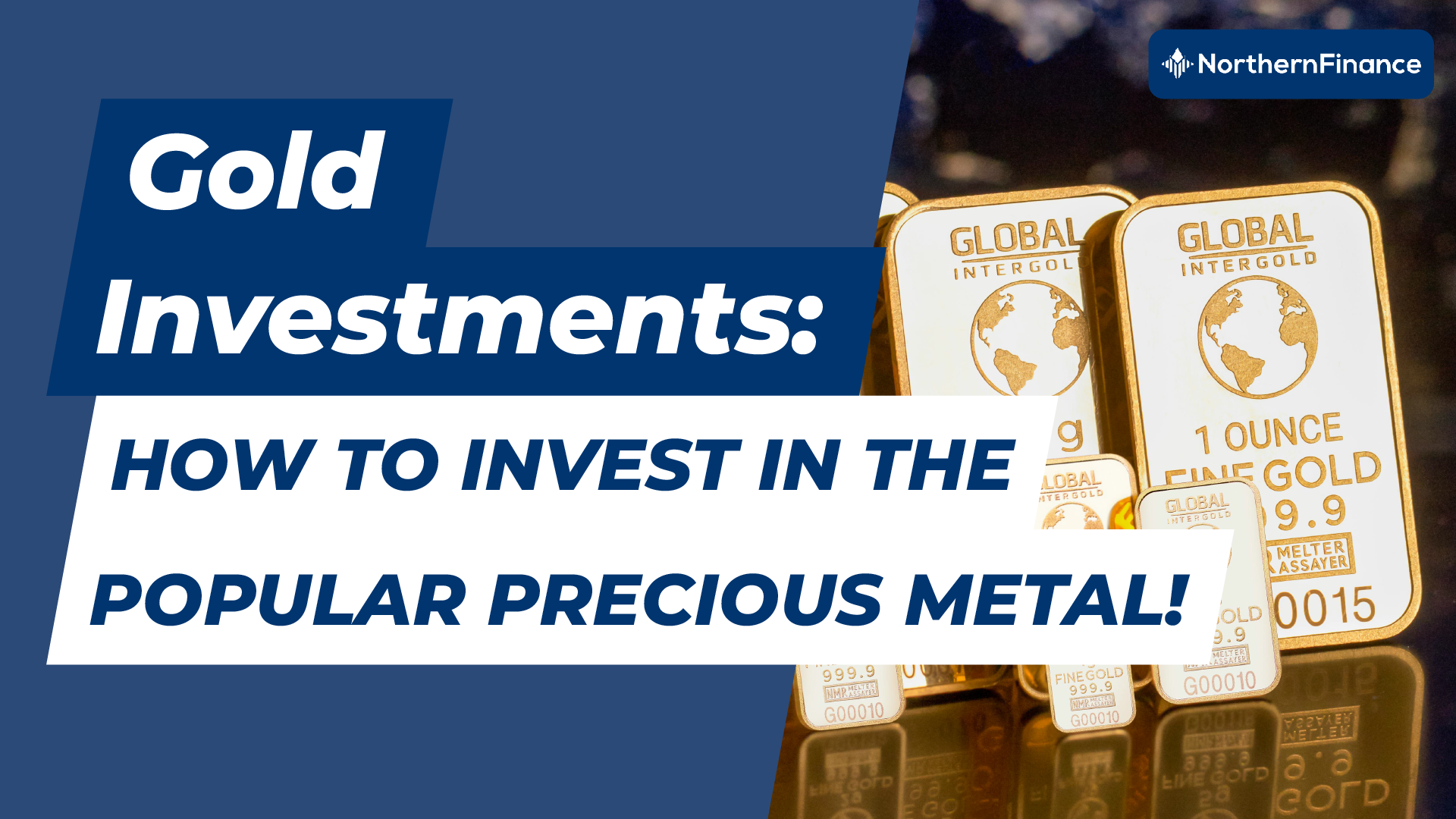
This type of investment involves investing in actual physical gold. A gold bar is also known as ‘bullion’. This means that, in the case of gold or silver, a purity of at least 99.5 per cent is guaranteed.
Smaller gold coins can also be purchased. One advantage, for example, is that this investment is easy to understand. Furthermore, there are normally no taxes payable when selling the gold bar or coins. A disadvantage, however, is the need to purchase a safe or a safe deposit box to store the gold securely.
Investing in gold – investing in gold-related shares
One indirect way to invest in gold is through companies that make their money from gold. A classic example of this is gold mining shares. When you buy a share, you become a co-owner of a gold mine and can benefit from gold discoveries.
There are also so-called gold ETCs. These are exchange-traded securities based on individual commodities or baskets of commodities. The main advantage here is that physical storage is not required. Nevertheless, this allows investors to gain exposure to the performance of gold. Incidentally, there are no traditional gold ETFs, as ETFs in Germany must, by definition, be diversified, which means it is not possible to invest in a single commodity.
Investments always involve the risk of loss. The value of your investments
can go up or down. The forecast or past performance is no guarantee or
prediction of future results.
Do your own research or seek financial advice before making any invest-
ments. The WELCOME promotion is subject to Terms and Conditions. Gift
Shares are allocated randomly from a selection of eligible stocks, with high-
er-value shares awarded less frequently.
Conclusion: Gold is unsuitable as an investment
There is no one-size-fits-all answer to whether gold is a sensible investment or not; it depends on the individual investor’s objectives. Anyone hoping for high returns should look to investments other than gold.
If, on the other hand, an investor wishes to diversify their portfolio and stabilise it in times of potential crisis, they can invest part of their assets in gold. History has shown that the performance of gold and shares often moves in opposite directions. In difficult economic times, many investors tend to favour gold as an investment.
When buying gold, it is important to consider the various options available and their respective advantages and disadvantages. Anyone buying physical gold should think carefully about storage beforehand, as additional costs may arise that further reduce the already modest return.

FAQ – Frequently Asked Questions about Investing in Gold

