
The best alternatives to instant-access savings accounts in 2026: Say goodbye to rock-bottom interest rates
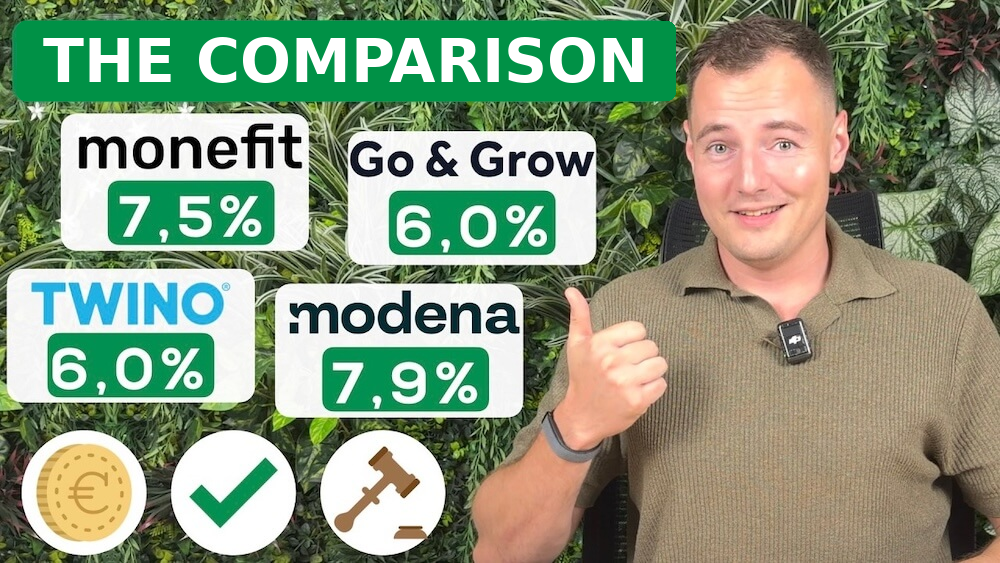

An increasing number of alternative investment options are offering investors the chance to earn interest returns ranging from 2.0 per cent to 10.52 per cent. Many of these options are characterised by a high degree of flexibility and are therefore often referred to as alternatives to instant-access savings accounts. It is often possible to start investing with small amounts, whilst the capital invested may be available again at short notice, depending on the provider.
I myself have invested around €30,000 in various alternative investment options and receive just under €200 in interest each month. In today’s post, we’ll look at the strengths and weaknesses of these alternative investments and explain what investors should bear in mind if they want to make more of their money.
In brief:
- The interest earned on a standard instant-access savings account is often eroded by inflation.
- Alternatives to instant access savings accounts offer significantly more attractive interest rates, but also carry a higher level of risk.
- Money market funds offer a conservative investment option with an annual return of up to 2.7 per cent.
- With alternative investment platforms, yield-seeking investors have the opportunity to earn interest of up to 10.52 per cent per annum.
Alternatives to instant-access savings 1: Up to 10.52 per cent interest with P2P loans
The traditional instant-access savings account offering 2 per cent interest has had its day. At least for any investors who want to get more out of their money. That’s why I, too, have invested in alternative platforms that earn me attractive interest of up to 10.52 per cent annually.
I currently use P2P platforms as an alternative to instant-access savings accounts. I have invested around €30,000 in these and have earned over €1,000 in interest in the first half of the year.
Furthermore, on many platforms I have the option, just as with traditional instant-access savings accounts, to access my money at any time. I’m taking on a higher level of risk, but I enjoy a similarly high degree of flexibility and receive significantly higher interest rates.
The most important things to know about P2P lending:
- P2P (peer-to-peer) lending involves private or institutional investors lending money to borrowers via an online platform. In return, investors receive interest on their invested capital.
- Here’s how it works: A borrower applies for a loan.
- A lender or a lending company finances this loan.
- The loan is passed on to investors, either in full or in part, via a P2P platform.
- Investors receive regular interest payments as long as the loan is repaid on schedule.
- Depending on the product and platform, investors often receive between 6% and 10% interest per year.
Good to know:
P2P platforms differ from traditional instant-access savings accounts. They are not bank deposits, but investments in companies or loans that are not covered by statutory deposit protection.
Let’s now take a look at the P2P lending platforms, which offer a good alternative to traditional call money accounts and allow investors to earn interest of between 6 per cent and 10.52 per cent per annum.
This way, you can decide for yourself whether you want to stick with traditional call money accounts or opt for investment options where your returns aren’t eroded by inflation.
Platform 1: Go & Grow with up to 6% interest
Go & Grow is the P2P platform of its parent company Bondora, which has been in the market since 2008 and has been regulated as a lender by the Estonian Financial Supervisory Authority since 2016. With over 500,000 investors and a total loan volume of around €697 million in 2025, Go & Grow is one of the absolute market leaders in Europe.
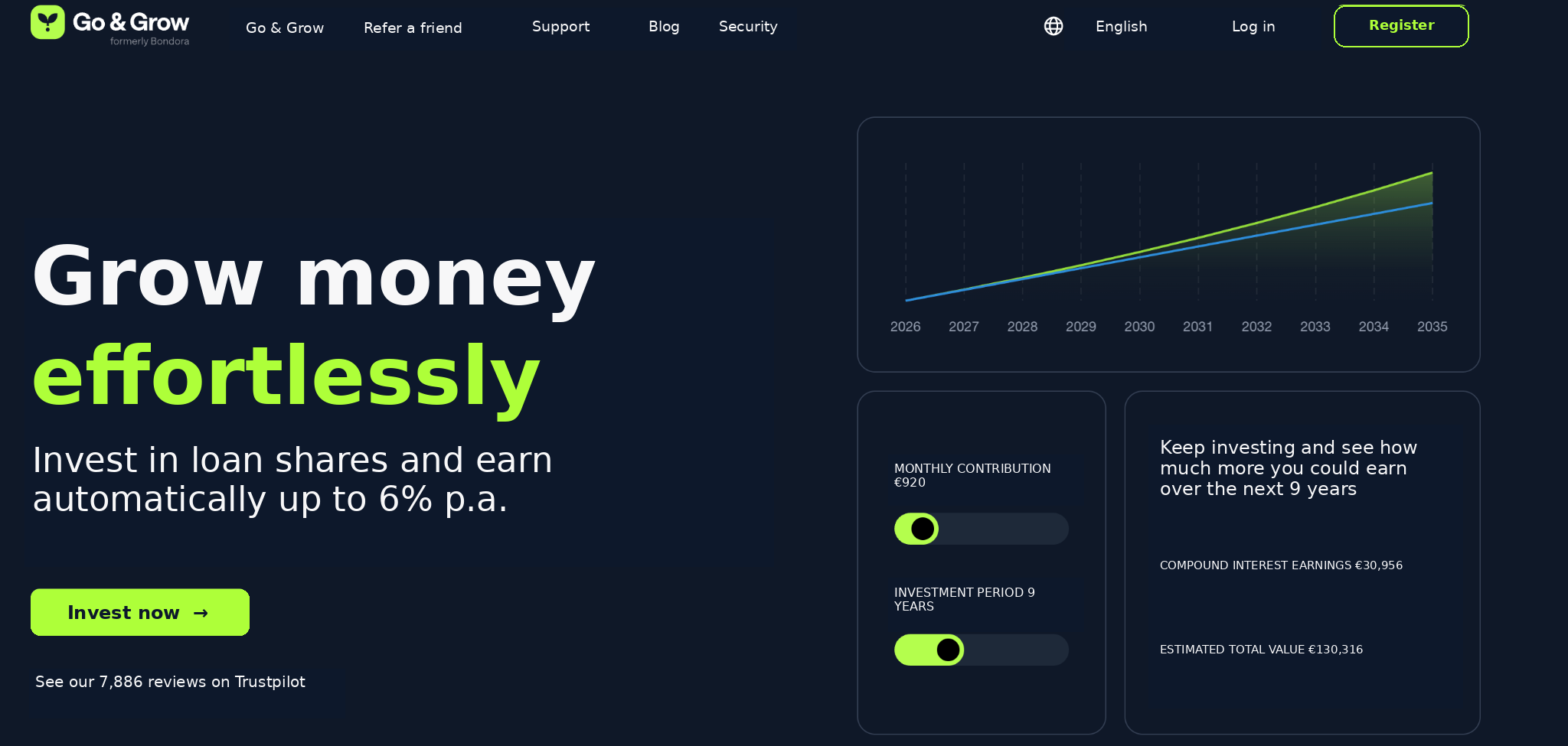
The interest rate model for Go & Grow differs from that of many other platforms. Here, investors receive a fixed interest rate of 6 per cent per annum and have no option to earn higher interest by choosing a longer term.
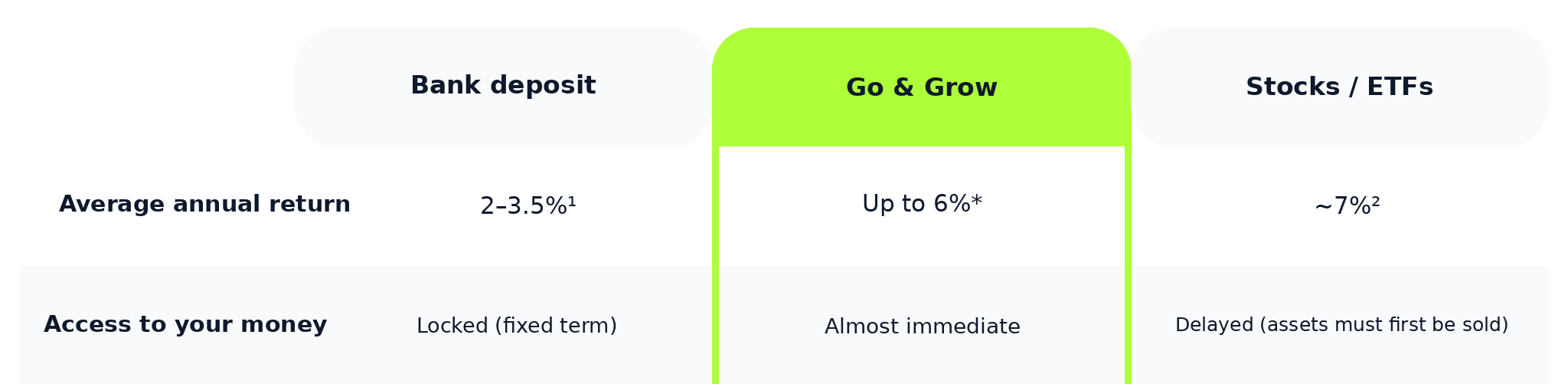
However, investors can start investing from as little as €1, which is a major advantage, particularly for beginners. Go & Grow also has no limit on the maximum investment.
Payouts on Go & Grow are made daily; however, there is no automatic payout feature here, unlike on the rival platform, Monefit’s SmartSaver.
When it comes to the availability of funds, Go & Grow scores highly against the competition: investors enjoy maximum flexibility and can withdraw all their money every day. This can be useful, for example, if you need quick access to your money in an emergency.
Taxation is handled in the usual way on most P2P platforms. This means you must declare your earnings yourself in your tax return. However, this is very straightforward and can be done in just a few clicks. Simply download the PDF provided and enter your earnings – that’s it.
Go & Grow also provides you with the relevant tax documents. The difference is that here, tax is automatically deducted at source. This means tax is only deducted when the interest is actually paid into your account, rather than every time interest is credited on the platform. As a result, your tax burden may be slightly reduced.

Investments always involve the risk of loss. The value of your investments
can go up or down. The forecast or past performance is no guarantee or
prediction of future results.
Do your own research or seek financial advice before making any invest-
ments. The WELCOME promotion is subject to Terms and Conditions. Gift
Shares are allocated randomly from a selection of eligible stocks, with high-
er-value shares awarded less frequently.
Platform 2: TWINO FLEXI with up to 6% interest
The TWINO FLEXI platform is also currently on the market offering a fixed rate of 6%, which is the maximum return investors can earn here too. TWINO’s Polish lender has audited annual accounts and generated a profit last year equivalent to around €7.8 million.
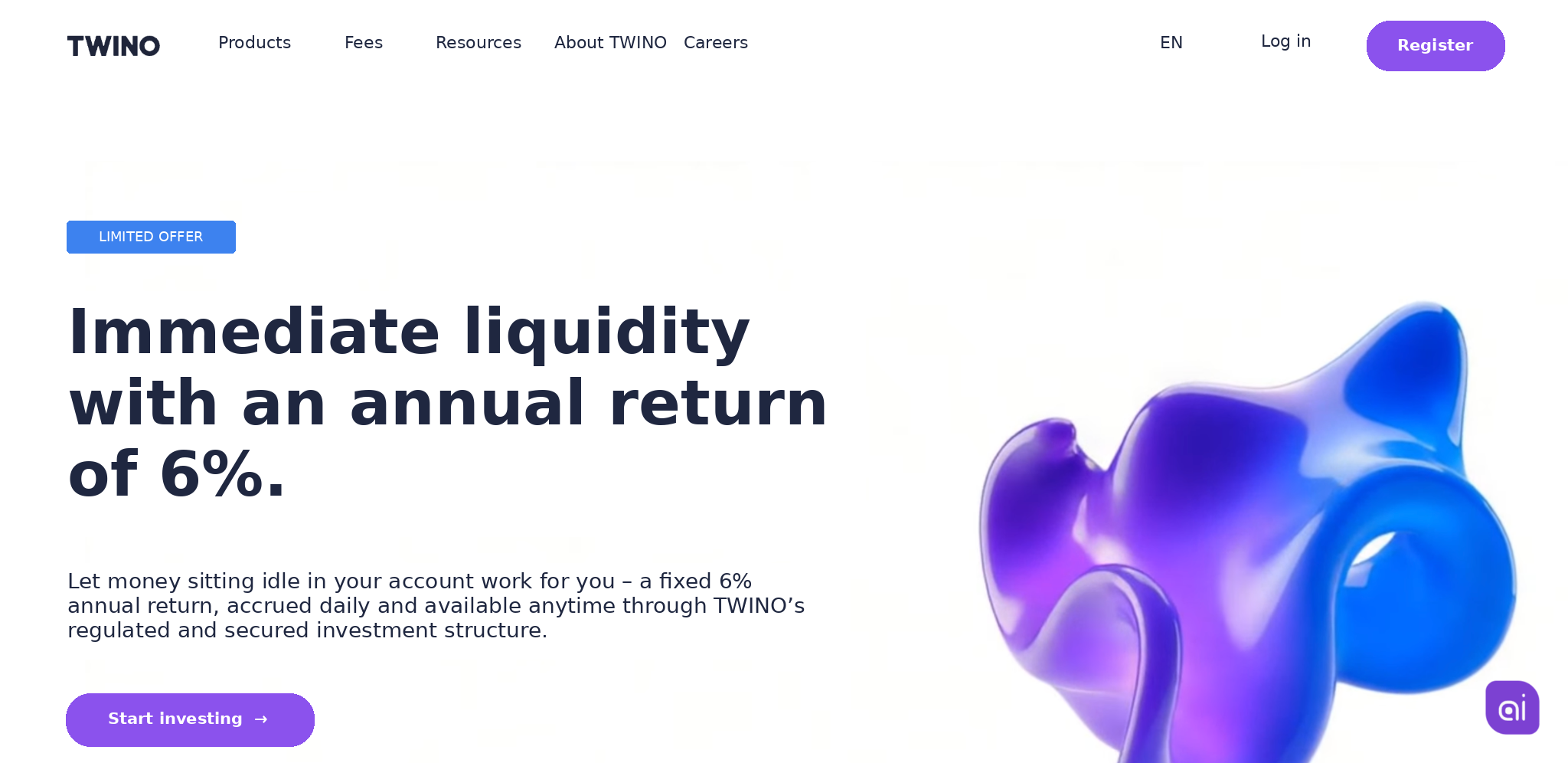
However, I have to say that, in my view, the 6 per cent offered by TWINO is a little too low, as the platform is significantly newer than the market leader, Go & Grow, and therefore still has to prove itself.
The minimum investment is €10. If you want to find out the investment limit, you’ll have to dig a bit deeper and look at page 7 of the prospectus. It states that an investor may hold a maximum of 10,000 shares. And as each share has a nominal value of €5,000, the maximum investment in FLEXI is €5 million.

Investors can also have their interest paid out daily here, but as with Go & Grow, there are no advanced features available.
TWINO FLEXI is the only platform regulated by the Latvian Central Bank. However, the Central Bank currently imposes a limit on the platform’s total volume, as the company is permitted to issue asset-backed securities up to a maximum total value of €10 million.
Good to know:
Despite regulation, none of the platforms offer a deposit guarantee – unlike traditional instant-access savings accounts. Investors therefore always bear the risk of losing their money.

Platform 3: Monefit SmartSaver with interest rates of up to 10.52%
With Monefit SmartSaver, investors receive 7.5 per cent with flexible investment and up to 10.52 per cent per annum if they invest their money in a Vault for 12 to 24 months. I’m currently earning between 9.9 per cent and 10.52 per cent. We’ll look at my portfolio in more detail below.
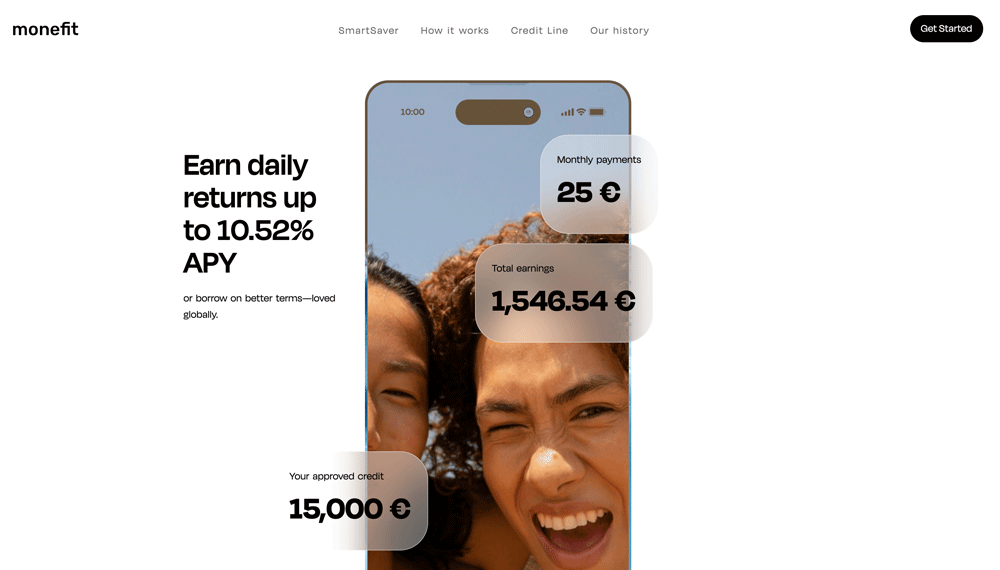
The minimum investment for SmartSaver is €10, which places it in the middle of the pack when compared with other platforms. The maximum investment, at €500,000, is very high.
Payouts from the flexible product are made daily, whilst those from the fixed-interest Vaults are made once at the start of each month. Here, too, you can have your “passive income” paid out to your account free of charge with just one click (a 1 per cent fee applies for direct transfers to your card).
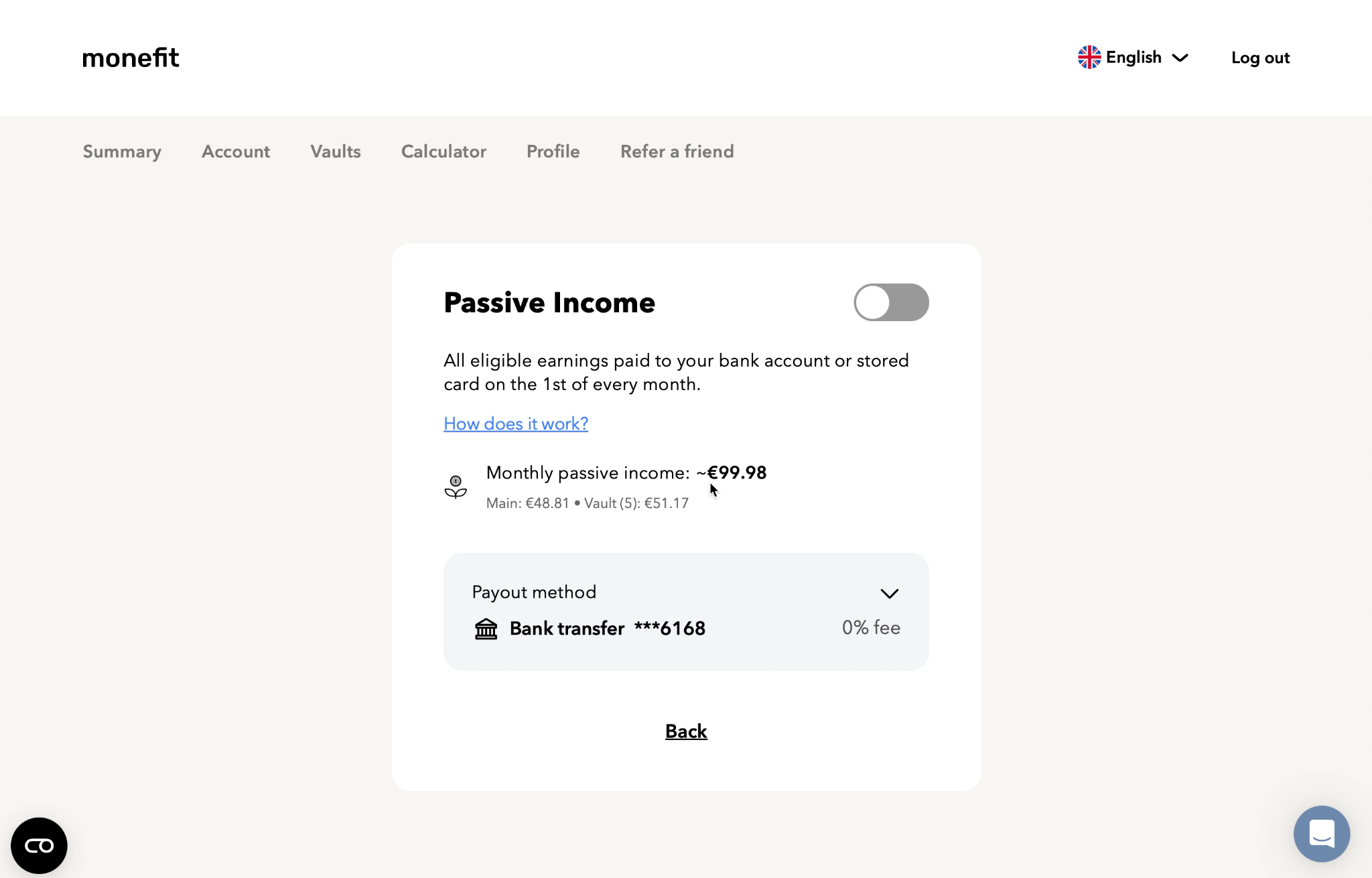
The platform reliably pays out investors’ funds to their bank accounts within 10 working days. For some time now, it has also been possible to withdraw up to €1,000 immediately each month.
In terms of the platform’s profitability, Monefit’s parent company, the Creditstar Group, is clearly leading the way. The audited annual accounts for 2025 show a record profit of €13.5 million.

Savings alternatives 2: Up to 2.7% interest with money market funds
A money market fund is an investment fund that invests in what are known as money market instruments. These instruments are generally very short-term and are considered relatively safe. The focus is on instant-access or fixed-term deposits, government bonds or corporate bonds with maturities ranging from a few days to a maximum of one year.
The aim of the fund is to be as stable and liquid as possible, which means that the money is available almost at any time and the performance remains consistent. The return is based on the current interest rate levels in the money market.
What do money market funds offer you?
- Security: Money market funds are low-risk, but do not offer deposit protection like instant-access savings accounts.
- Liquidity: Units can be sold at any time with ease.
- Regulation: EU regulations ensure that the funds are crisis-proof and invest only in short-term assets.
- Return: Annual interest rates typically range between 2.0% and 2.7%, depending on interest rate levels in the eurozone.
- Favourites: Many investors opt for money market-style ETFs, such as the Fidelity Institutional Liquidity Fund (ISIN: IE000AZVL3K0) or Xtrackers Overnight (ISIN: LU0290358497).
- Use: Ideal for parking money in your investment account in the short term when overnight deposit rates are insufficient.
Money market fund 1: Fidelity Institutional Liquidity Fund
The Fidelity Institutional Liquidity Fund (ISIN: IE000AZVL3K0) is a money market fund that invests exclusively in short-term, high-quality money market instruments and has been offering investors a conservative alternative to instant-access savings with daily liquidity since 2023.
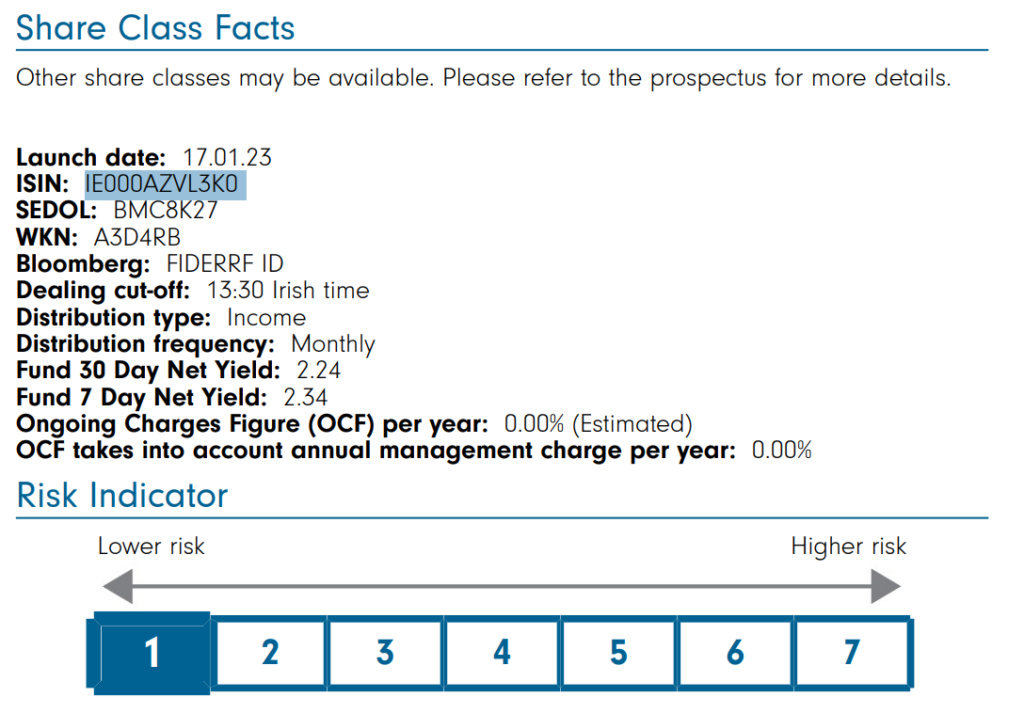
The fund aims to invest the capital as stably as possible and to generate a return in line with current money market interest rates.
Thanks to its broad diversification across various issuers, this fund is particularly suitable for investors who wish to take on low risk but are nevertheless looking for an attractive alternative to traditional instant access savings accounts.
Money Market Fund 2: Xtrackers Overnight
The Xtrackers Overnight (ISIN: LU0290358497) is an ETF that tracks the performance of the euro overnight rate (€STR) and serves as a flexible, exchange-traded alternative to traditional instant access savings accounts.
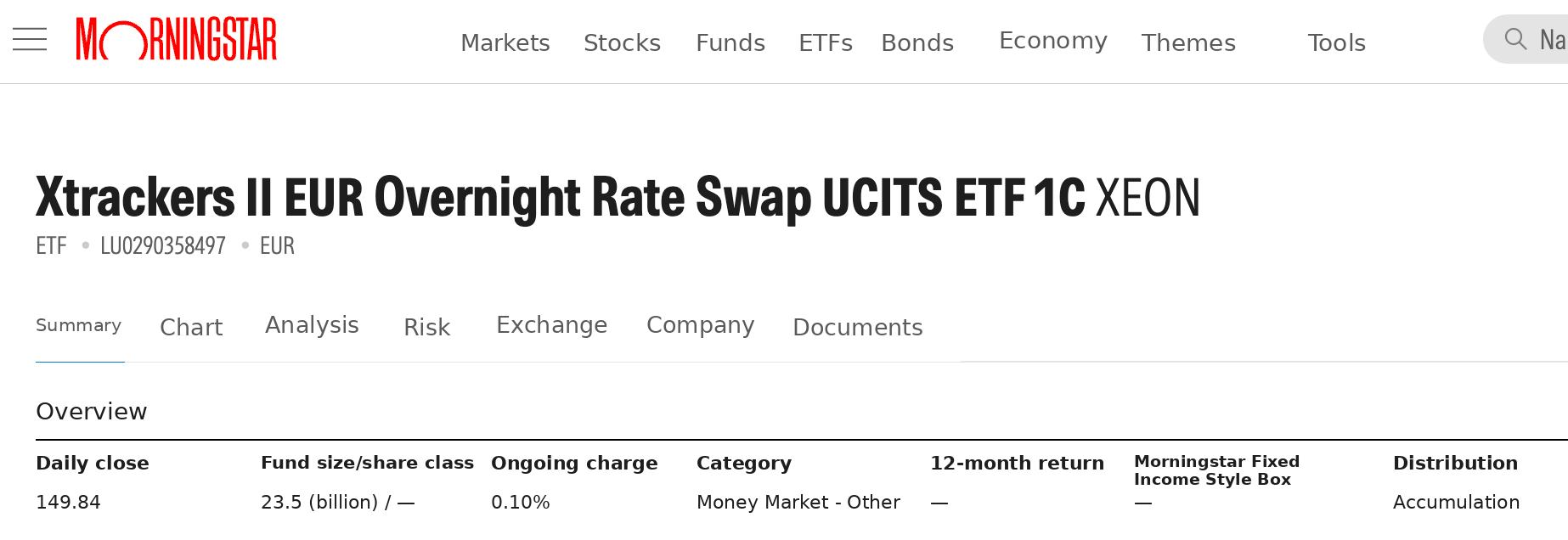
Unlike a traditional money market fund, an ETF is traded on each trading day, meaning it can be bought and sold at any time during trading hours.
Due to its transparent structure, high liquidity and low costs, it is considered by many investors looking to earn interest on their money in the short term to be an attractive alternative to a call money account.
Investments always involve the risk of loss. The value of your investments
can go up or down. The forecast or past performance is no guarantee or
prediction of future results.
Do your own research or seek financial advice before making any invest-
ments. The WELCOME promotion is subject to Terms and Conditions. Gift
Shares are allocated randomly from a selection of eligible stocks, with high-
er-value shares awarded less frequently.
My savings account alternatives: How I invest
I’ve invested in all three of these overnight deposit alternatives myself, albeit with significantly different amounts. These currently earn me monthly interest of just under €1,000.
My holding in Monefit SmartSaver is considerably larger. I’ve been with them for several years now and, over this period, have built up my portfolio to just under €15,000 – my largest investment to date.
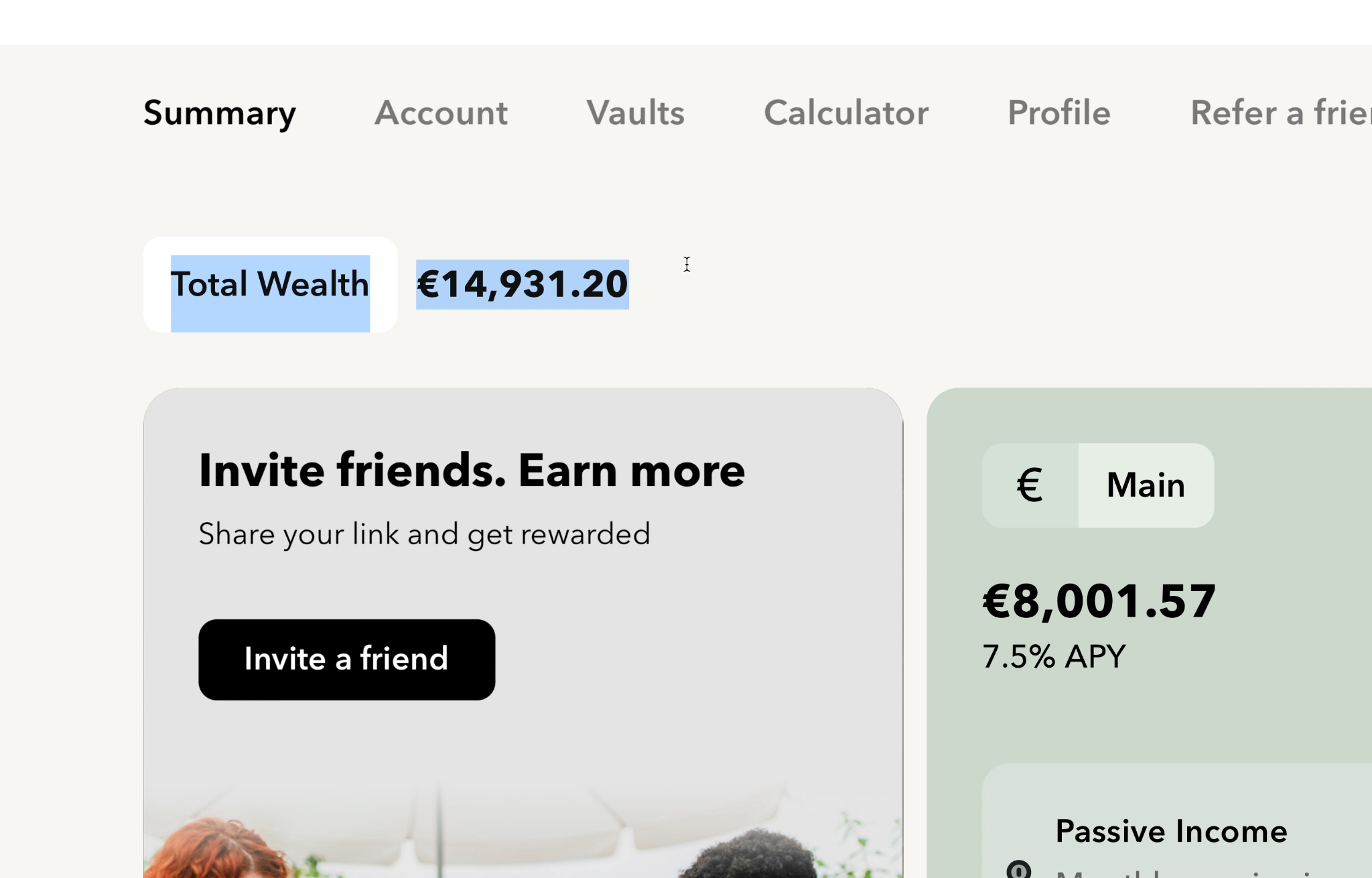
I am very confident in Monefit. I know both the product and the company, as well as the people behind it, very well, and believe that Monefit was by far the fastest-growing investment product in the sector.
I expect Monefit’s success story to continue, which is why I intend to expand my portfolio even further in future. The parent company, Creditstar, is the most profitable, and so Monefit remains my clear favourite.
I’ve also become heavily invested in Go & Grow. My portfolio currently stands at just under €13,000. I’ve been involved here from the very beginning too – more precisely, since it entered the market in 2018. It’s really satisfying for me to see how my portfolio has performed over this period.
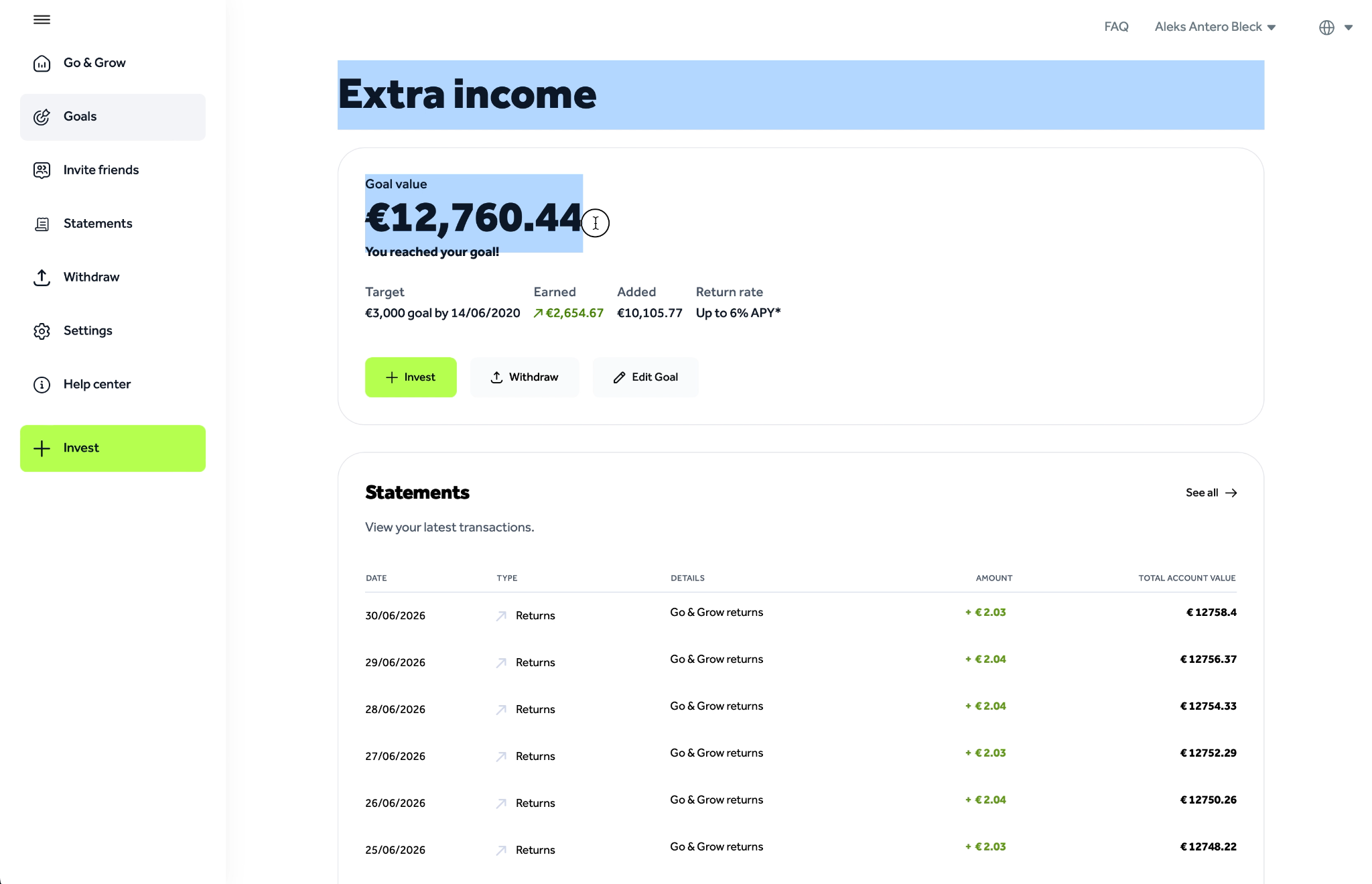
For me, the biggest advantage of Go & Grow is the high level of reliability it offers investors. So far, I’ve always had my money paid out reliably and in no time at all into my account.
I’ve also been invested in TWINO itself for quite some time now, and have always had around €2,000 invested there. I’ve now invested a little over €400 on top of that to test the FLEXI product and gain some experience with it.

Alternatives to traditional instant-access savings accounts: Make your money work harder
The following chart shows you at a glance how an investment of €10,000 grows at rates of 2 per cent and 5 per cent per year. If we look at the final value after 30 years with a return of 2 per cent, it comes to €18,136. With an expected return of 5 per cent after 30 years, the final value is €43,219. In hindsight, your investment in a night-money alternative would have been significantly more worthwhile!
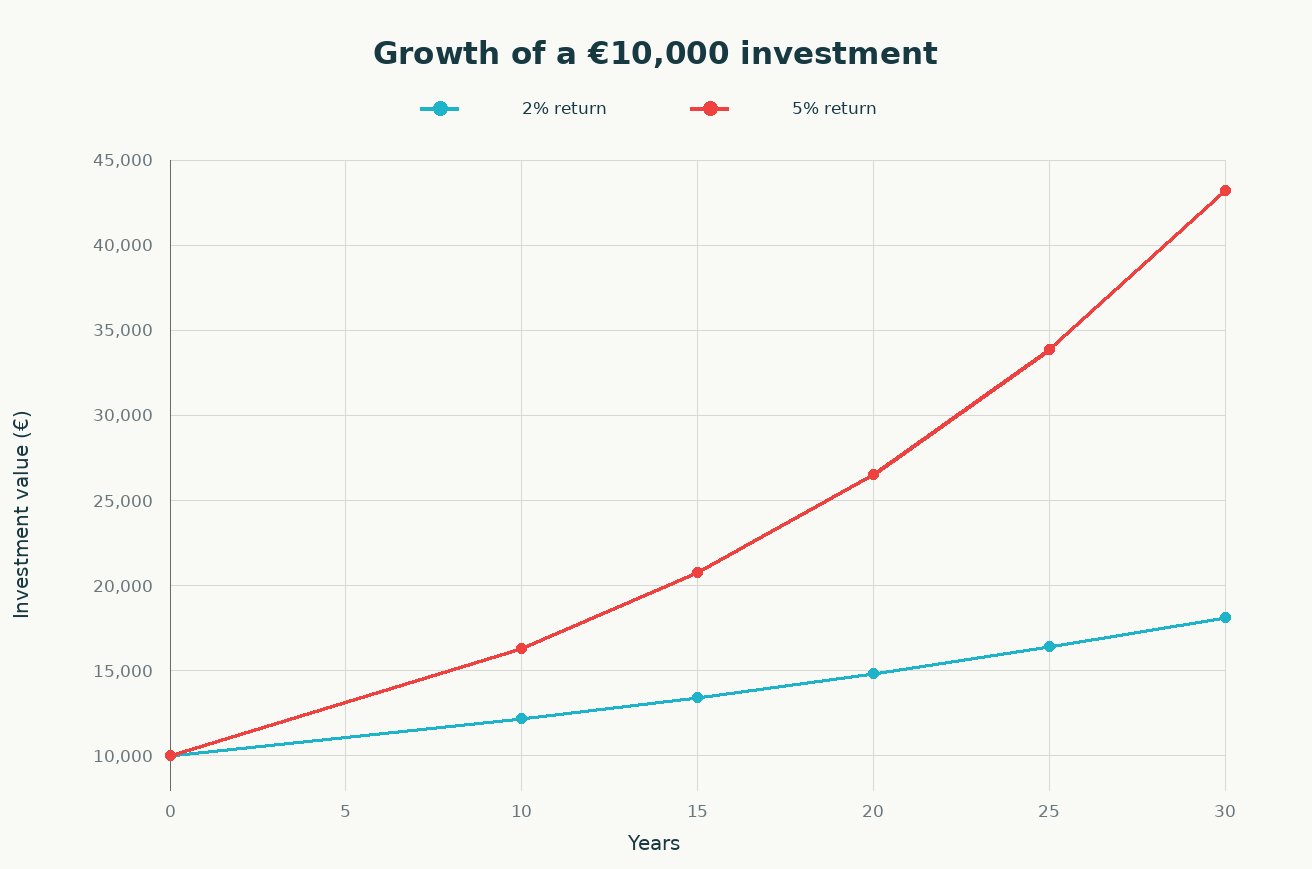
Comparison: 2% vs 5% return on a €10,000 investment over 30 years (before tax)
This is how much your money has lost in value in recent years
Anyone who takes a look at the trend in inflation rates in Germany will quickly see the dilemma facing savers:
- In 2025, inflation stands at around 2.1 per cent
- The previous year, it was as high as 2.2 per cent
- Anyone looking at the years 2022 and 2023 will be even more disappointed, as rates climbed to almost 7 per cent back then
The chart below shows the base rate over the last 15 years and clearly illustrates this disappointment: only a brief ‘spike’ brought acceptable interest rates. However, this window of opportunity vanished in the blink of an eye.
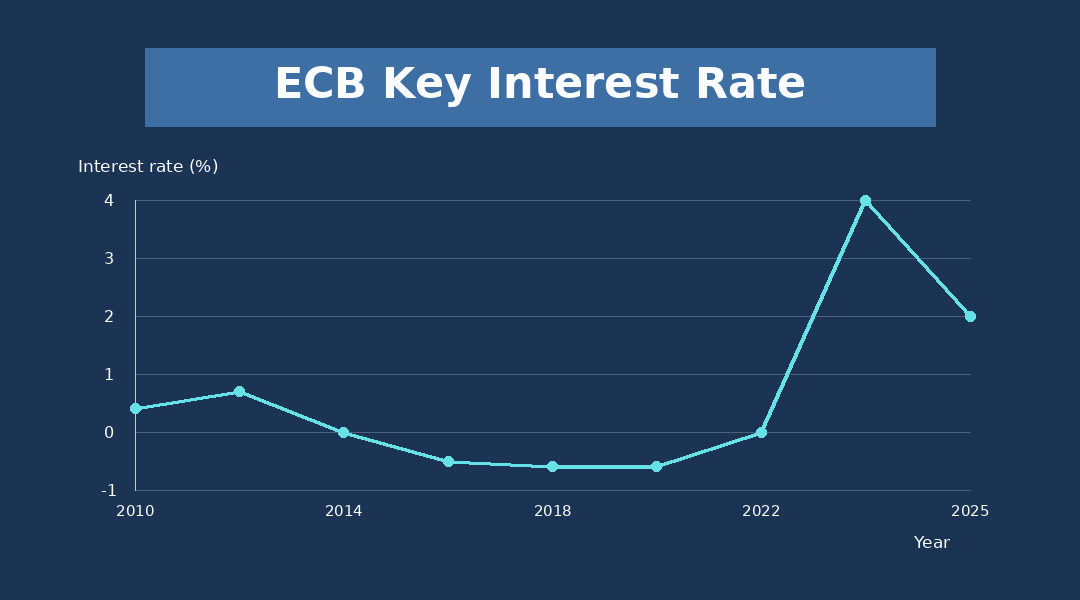
If banks are currently paying only around 2 per cent interest on your instant-access savings account, you’re getting a very poor deal. As a result, your money loses purchasing power year after year. This means that, over the long term, your savings are actually worth less and less in real terms, despite the interest credited to your account. A proper wealth-building strategy looks very different.
The table below shows the inflation rate in Germany over the last 10 years. If you compare these figures with the respective base rate, you’ll realise there are better alternatives to a call money account.
| Year | Inflation rate (rounded) |
| 2025* | 2,1 % |
| 2024 | 2,2 % |
| 2023 | 5,9 % |
| 2022 | 6,9 % |
| 2021 | 3,1 % |
| 2020 | 0,5 % |
| 2019 | 1,4 % |
| 2018 | 1,8 % |
| 2017 | 1,5 % |
| 2016 | 0,5 % |
You can find out more about how inflation works and why it’s so dangerous in the article “Inflation Explained”!
Conclusion: P2P platforms are a worthwhile alternative to instant-access savings accounts!
P2P platforms are now referred to by many investors as alternatives to instant-access savings accounts, and with good reason. This is because the features of these platforms are often very similar to those of traditional instant-access savings accounts, except that investors can earn significantly higher interest rates with these alternatives.
Nevertheless, each platform has its own advantages and disadvantages, which may be relevant to different types of investor. For instance, Go & Grow scores highly for its high flexibility when it comes to withdrawals, whilst the parent company behind Monefit 2025 boasts the highest profitability and is on a growth trajectory.
TWINO FLEXI scores highly in terms of regulation. Which platform is the right one depends heavily on individual preferences.
For investors seeking higher potential returns and willing to take on a higher level of risk to achieve them, all these platforms can be an interesting alternative to traditional instant-access savings accounts. Click here for the detailed review of the two market leaders: Monefit vs. Bondora.
FAQ: Frequently asked questions and answers about instant-access savings alternatives

