
TWINO FLEXI vs. Bondora Go & Grow: Which product is right for you?


TWINO FLEXI and Go & Grow from Bondora are popular products amongst investors, offered by platforms with many years’ experience. Whilst Go & Grow has been available since 2018, TWINO FLEXI was only launched in May 2026. With both products, investors invest either directly or indirectly in consumer loans bearing 6 per cent interest per annum.
TWINO FLEXI and Go & Grow are therefore comparable in terms of expected returns. But are the interest rates really guaranteed, or do they depend on a number of fluctuating factors? In today’s TWINO FLEXI vs. Go & Grow post, we’ll take a detailed look at both products and explain when each one is the best option for you as an investor.
In brief:
- TWINO FLEXI offers a fixed interest rate of 6 per cent per annum, whilst Go & Grow offers a target annual return of up to around 6 per cent.
- The interest rate cap in Poland could mean that TWINO will have to lower its interest rates in the long term.
- Thanks to the MiFID II regulations, investors with FLEXI benefit from higher transparency requirements and additional safeguards.
- Go & Grow’s loan portfolio is diversified across several markets, whilst FLEXI is currently focused on the Polish market.
TWINO FLEXI vs. Go & Grow: How well do these investment products perform?
TWINO FLEXI and Go & Grow are two investment products offered by the P2P platforms TWINO and Bondora respectively. Both are among the more established platforms, with many years’ experience and a solid track record.
Before we look at the individual products, it is worth taking a closer look at the two platforms to better understand both their business models and their performance over recent years.
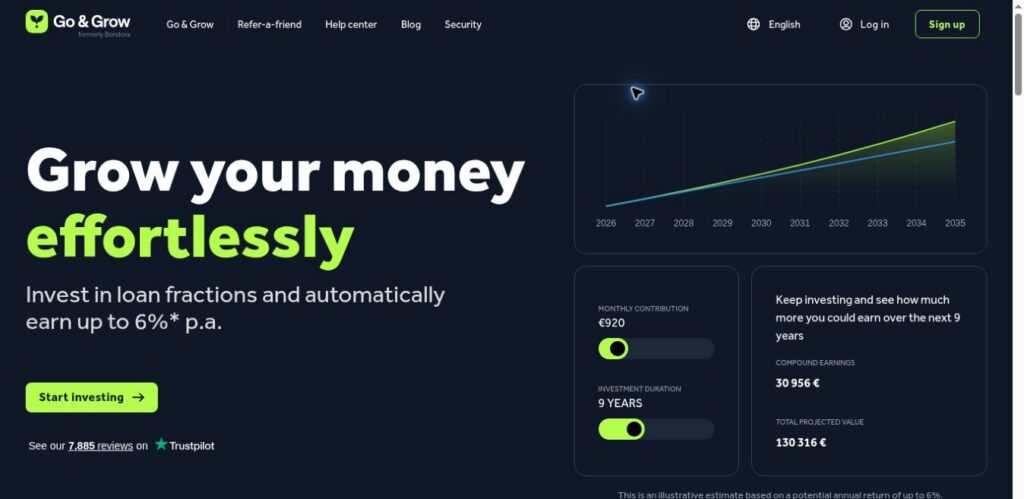
The Bondora Group was founded in Estonia in 2008, making it one of the oldest P2P platforms in Europe. At Bondora, investors invest in consumer loans, the majority of which originate from its core market, Finland. The company now has over 500,000 registered users and has been profitable for the ninth year running.
With the “Go & Grow” investment product, investors have the opportunity to achieve a return of up to 6 per cent per annum.
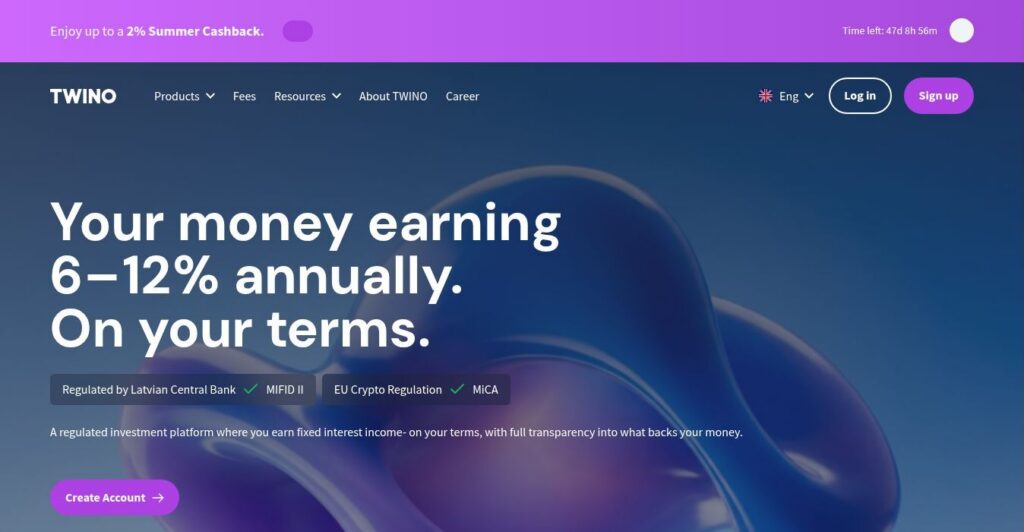
TWINO has been operating since 2015 and offers its current base of over 22,000 registered users regulated asset-backed securities (ABS) backed by consumer loans. TWINO’s core market is Poland, where loans are granted by the lender Netcredit.
With TWINO FLEXI, investors have the opportunity to achieve a fixed annual return of 6 per cent.
The table below gives you an overview of the key differences between the two platforms.
| Criterion | TWINO | Bondora |
| Year of foundation | 2015 | 2008 |
| Head office | Riga, Latvia | Tallinn, Estonia |
| Management | Kristiāns Purviņš | Pärtel Tomberg |
| Total loan portfolio | Over €1.2 billion | Over €1 billion |
| Regulation | Supervised by the Latvian Central Bank and regulated under MiFID II | Supervised by the Estonian Financial Supervisory Authority; not regulated under MiFID II |
| Annual Report | Yes | Yes |
| Investors | 22,000+ | 500,000+ |
| Return | 6–12% p.a. | Up to approx. 6% p.a. |
| Buy-back guarantee | Yes | No |
| Minimum investment amount | €10 | €1 |
| Auto-Invest | Yes | Yes |
| Secondary market | Yes | No |
| Loyalty programs | Welcome and referral promotions | Referral schemes and campaigns |
I have experience with both TWINO and Bondora Go & Grow, and have invested several thousand euros across both platforms. Use my exclusive Twino bonus if you want to get started with Twino and secure 6 per cent interest.
Let’s now begin with a detailed comparison of TWINO FLEXI vs. Go & Grow.


Comparison 1: TWINO FLEXI vs. Go & Grow: Interest Rates
For investors, the most interesting aspect of the TWINO FLEXI vs. Go & Grow comparison is undoubtedly the issue of interest rates. How high is the potential return for investors, and which platform offers better value for money?
When it comes to interest rates, FLEXI and Go & Grow are, at first glance, quite comparable: both products offer investors 6 per cent interest per annum with flexible payouts. However, there is a subtle difference, as the interest rate for TWINO FLEXI is fixed at 6 per cent, whilst Go & Grow offers a target return.
This means the return on FLEXI is much more predictable than that of Go & Grow.

FLEXI interest model:
- Interest is calculated daily based on the investment
- Interest is paid out monthly in accordance with the payment schedule
- Interest accrues from the first day of the investment
- Interest that has already accrued but has not yet been paid out is credited to the FLEXI Wallet as FLEXI Cash
- FLEXI Cash is automatically invested as soon as suitable investment opportunities become available and the minimum investment amount of €10 has been reached
- Amounts held in the wallet as FLEXI Cash do not earn interest
- Investment limit of €10,000 per investor
Go & Grow interest rate model:
- Daily calculation of returns based on the investment
- Income is automatically credited to the Go & Grow account and reinvested straight away
- Interest starts accruing as soon as money is invested in the Go & Grow account
- Thanks to automatic reinvestment, investors benefit from the effect of compound interest, as income already earned also contributes to future returns
The advantage of FLEXI is that interest rates are more predictable. However, Go & Grow scores highly when it comes to the compound interest effect, as the entire capital remains invested, whereas with FLEXI’s FLEXI Cash feature, there may be an interim period during which no interest is earned.
Another disadvantage of FLEXI is the investment limit of €10,000 per investor, which caps potential interest growth.
Comparison 2: TWINO FLEXI vs. Go & Grow: Liquidity
FLEXI and Go & Grow take a similar approach not only to the interest model but also to liquidity: both allow investors to withdraw their money flexibly at any time. An early sale via the secondary market is therefore not necessary.
Compared with other P2P platforms, both FLEXI and Go & Grow offer a significantly more flexible approach to withdrawals.
On comparable platforms, liquidity often depends on:
- which loans have been purchased
- what the terms of the loans are
- and whether the borrower makes their repayments on time
It is important to note, however, that payouts for both FLEXI and Go & Grow depend on the liquidity of the two portfolios. In exceptional market conditions, this may lead to delays or reduced payouts.
However, experience shows that Go & Grow rarely experiences delays or other issues with payouts. One reason for this is that Go & Grow is now one of the world’s most liquid products in the P2P sector.
Investors can usually withdraw their capital within a short space of time – often within seconds to a few hours. As a result, Go & Grow is increasingly being used by many investors as a flexible alternative to an interest-bearing instant access savings account.
Comparison 3: TWINO FLEXI vs. Go & Grow: Track Record & Regulation
First of all: investing in P2P loans often comes with a higher return, but also carries a slightly higher risk. As an investor, you should therefore always familiarise yourself thoroughly in advance with the risks and security mechanisms of the individual platforms, so that you can approach wealth-building in an informed and aware manner.
With FLEXI and Go & Grow, investors invest in consumer loans. With Go & Grow, this is done directly through the consumer loans of the parent company, the Bondora Group, whilst with FLEXI, the investment is made indirectly via asset-backed securities (ABS).
Good to know:
Asset-backed securities (ABS) are securities backed by a pool of assets, such as loans, lease receivables or credit card receivables. Repayments and interest paid to investors are funded from the cash flows generated by these underlying assets.
The capital invested is not protected by the statutory deposit guarantee scheme. In the event of payment defaults or problems with the platforms, there is therefore a risk of losses, including the total loss of the investment.
Nevertheless, the TWINO and Bondora platforms are among the more experienced players in the P2P market; they have been in operation for more than 10 years and have therefore weathered one or two difficult market phases.
The most relevant market phases include:
- The 2008–2009 global financial crisis
- The 2011–2013 European debt crisis
- The ECB’s period of low interest rates between 2014 and 2021
- The 2020 COVID-19 pandemic
- A sharp rise in interest rates since 2022
- Various economic and geopolitical market phases
In particular, the Bondora Group, which has been in existence since 2008, has thus demonstrated a high degree of resilience, which bolsters investor confidence in the company. The volume of loans financed – in each case exceeding €1 billion – also strengthens the position of both companies.
One important point that distinguishes Go & Grow from FLEXI, however, is the regulation of the parent companies behind the two products: both the Bondora Group and TWINO are subject to state financial supervision. The Bondora Group is NOT regulated under a MiFID II licence, whereas TWINO is.
Investors in Go & Grow therefore do not benefit from the stricter regulations applicable to investment firms. Investors in FLEXI, on the other hand, benefit from higher transparency requirements, comprehensive disclosure obligations and additional investor protection measures.
Despite not holding a MiFID II licence, Bondora is a highly transparent provider. With just a few clicks, investors can gain insight into key loan portfolio statistics, such as:
- Breakdown of the active loan portfolio by duration of arrears
- Breakdown of lending by country and internal risk assessment
- as well as loan defaults in individual countries and their recovery rates
For a more in-depth look at the Bondora Group’s portfolio statistics, click on this article.
Another important regulatory issue that affects TWINO exclusively is the interest rate cap in Poland:
- During the coronavirus pandemic, Poland introduced a statutory interest rate cap, thereby limiting the maximum permissible interest rates and other borrowing costs.
- For consumer credit providers such as TWINO, this meant significant reductions in margins on Netcredit Poland’s underlying loan portfolios.
- According to TWINO, Netcredit’s loan portfolio is now showing healthy growth once again.
- Should the Polish government implement a further reduction in permitted interest rates, this could once again lead to a reduction in TWINO’s margin and the returns for TWINO investors.
Comparison 4: TWINO FLEXI vs. Go & Grow: Loan portfolio
In terms of diversification, Go & Grow has the edge over TWINO. The Bondora Group grants loans in various countries, including its core market of Finland and its home market of Estonia.
In addition, the Bondora Group is working on steadily expanding into other high-potential markets. These include the Netherlands, Denmark and Latvia.
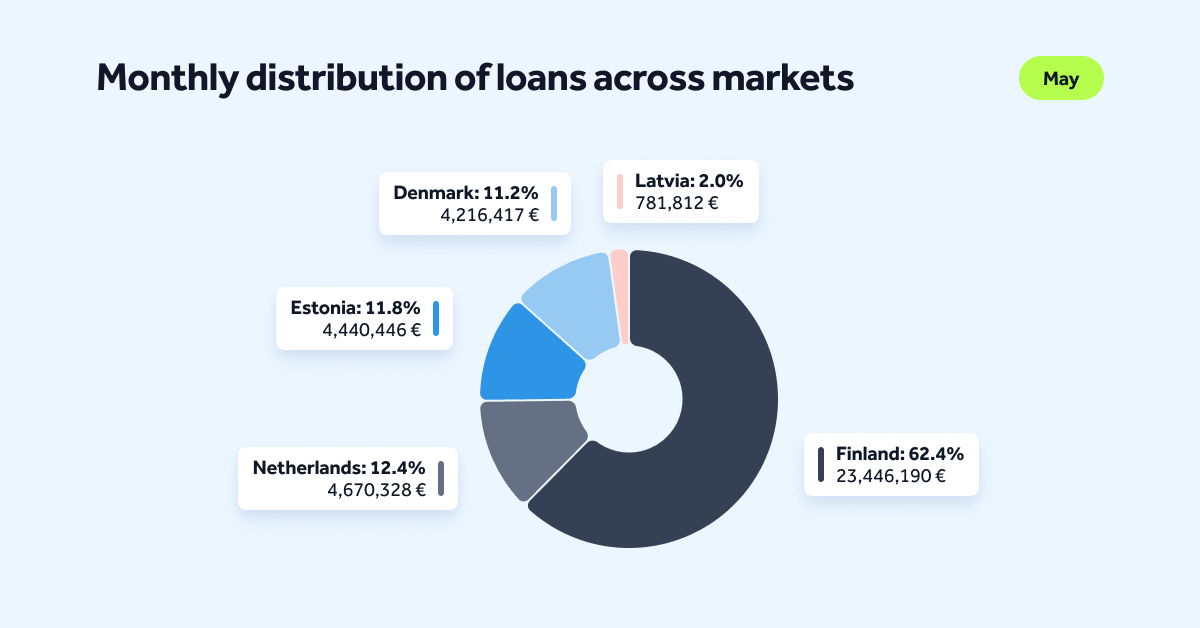
Although potential default rates are currently still higher in emerging markets (PD12), Bondora’s efforts demonstrate that the company is striving to diversify its geographical footprint and thus avoid being dependent on the profitability of any single market.
The situation at TWINO is quite different. The platform currently focuses primarily on its core market, Poland, and the Polish lender Netcredit. As a result, diversification is significantly lower than at Bondora, which increases the risk for investors should problems arise in the market or with the lender itself.
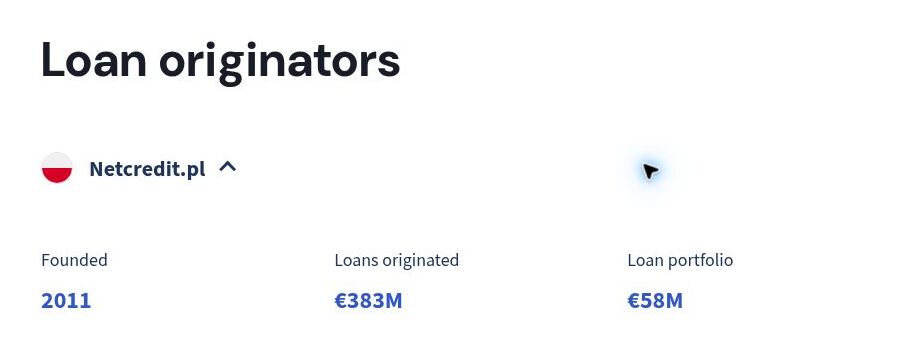
The table below gives you an overview of the key performance indicators for both providers over the past year.
| Performance 2025 | Bondora Group | TWINO (Netcredit) |
| Turnover | €62.7 million (+19.2%) | €53 million (+18.6%) |
| Net profit | €9.5 million | €10.35 million |
| IRR | 19.1% | N/A |
| Active portfolio | approx. €600 million | €58 million |
Comparison 5: TWINO FLEXI vs. Go & Grow: Features
As we have already highlighted, FLEXI and Go & Grow are similar in many respects. When it comes to features, I think Go & Grow’s ‘Goals’ function is particularly worth mentioning, and I’d like to look at this in more detail.
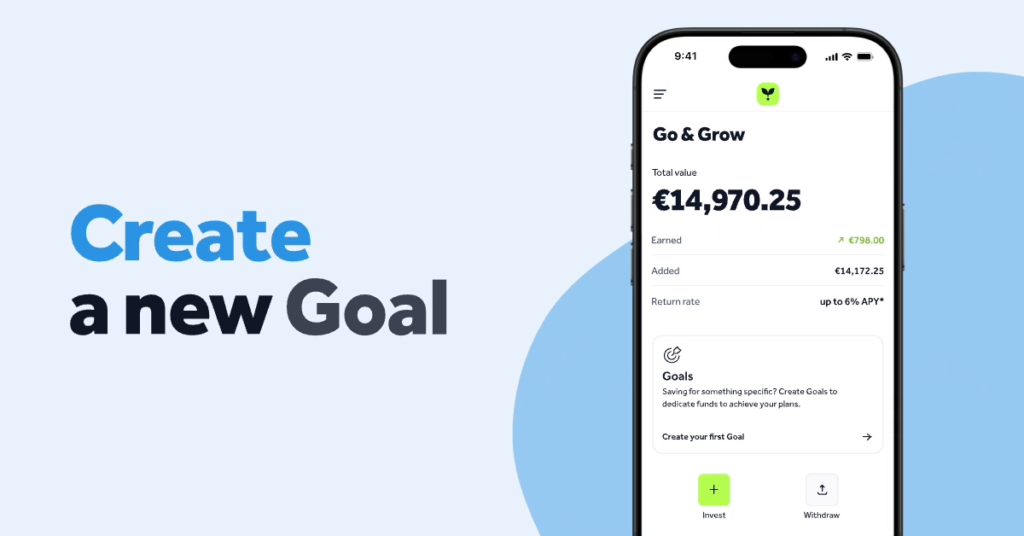
The ‘Goals’ feature allows you, as an investor, to structure your assets in a targeted way and build them up step by step. It gives you the option to set individual savings goals, name them as you wish and track your progress transparently at any time.
Possible goals include, for example:
- Holidays
- Emergency savings
- New car
- Long-term wealth building
The invested balance continues to earn the current return of around 6% per year – regardless of how many goals are set.
Comparison 6: TWINO FLEXI vs. Go & Grow: Fees
The table below gives you an overview of the fee structure for both products. These are identical in almost every respect, although there are minor differences regarding payouts and potential inactivity.
| Fee type | TWINO FLEXI | Go & Grow |
| Account opening | Free of charge | Free of charge |
| Deposit | Free | Free of charge |
| Invest | Free of charge | Free of charge |
| Buy/sell fees | None | Not relevant |
| Withdrawal | Free of charge | €1 per withdrawal |
| Account management | Free of charge | Free of charge |
| Administration fee | None | None |
| Inactivity fee | Up to €10 per month | None |
The company explains the inactivity fees on TWINO as follows:
“To ensure long-term sustainability and fairness within our investor community, we have introduced an inactivity fee of up to €10 per month for accounts that have not been used for an extended period.”
Generally speaking, however, it can be said that there is virtually no difference between the fee structures of TWINO FLEXI and Go & Grow. Both platforms offer attractive terms, which certainly make getting started with investing more appealing.
Take advantage of my exclusive Twino bonus if you want to get started with Twino and secure 6 per cent interest.
Is TWINO FLEXI or Go & Grow the better choice for you?
There is no one-size-fits-all answer to whether TWINO FLEXI or Go & Grow is the better product for you. The right choice depends both on your individual investment behaviour and on your risk preference and priorities.
Here’s why TWINO FLEXI is better suited to you:
- Predictable return: TWINO FLEXI is particularly suitable for investors who value a fixed rate of return and wish to calculate their returns more accurately. The 6 per cent return is structured as a fixed rate, making it more predictable than Go & Grow.
- Regulation and security: Anyone paying particular attention to the regulatory framework when making P2P investments should opt for TWINO FLEXI. Under MiFID II, there are higher requirements regarding transparency, disclosure obligations and investor protection than for products not regulated under MiFID II.
- Potential returns: Whilst Go & Grow is designed to offer returns of up to around 6 per cent per annum, the TWINO platform also offers other investment opportunities with potentially higher returns of up to 12 per cent. This makes TWINO particularly suitable for investors seeking high returns.
That’s why Go & Grow is a better fit for you:
- Security: Even without MiFID II regulation, Bondora provides its investors with comprehensive information on the performance and composition of its loan portfolio. For those who value a clear overview of portfolio performance and the underlying key figures, Go & Grow offers a transparent investment product.
Furthermore, Go & Grow has a longer track record. The product has been on the market since 2018, whereas TWINO FLEXI was only launched this May.
- Diversification: Thanks to the Bondora Group’s broader geographical reach, Go & Grow offers greater diversification than TWINO FLEXI, which is more heavily reliant on the Polish lending market and the lender Netcredit. Investors wishing to reduce concentration risk may therefore prefer Go & Grow.
- Greater return on investment: Due to the €10,000 investment limit on TWINO FLEXI, Go & Grow is more attractive to investors with larger sums. The entire capital can continue to earn interest there, whereas with TWINO FLEXI, no further investment in the product is possible once this limit is exceeded.
- Targeted wealth accumulation: Investors with a long-term investment horizon benefit particularly from the automatic compound interest effect and the ability to set up different savings goals with Go & Grow. This allows you to structure your wealth accumulation and plan for specific projects, such as an emergency fund, a holiday or long-term goals.
Portfolio comparison: How I invest
My portfolio with Go & Grow is now worth just under €13,000. This amount earns me daily interest of around €2. Since the start of the year, I have received just under €300 in passive interest income from my Go & Grow investment.
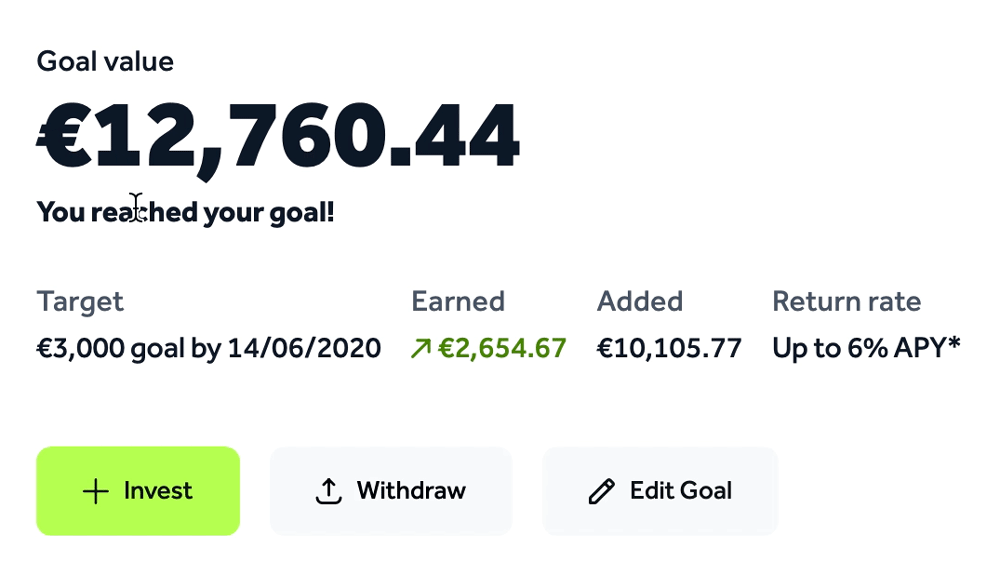
My interest income from TWINO is slightly lower at €115, but I’m still satisfied with how things are going here and will continue to invest via the platform.
However, on TWINO I do not invest in the FLEXI product, but in the alternative loans offering a higher interest rate of up to 12 per cent. In return, my money is tied up for a longer term and cannot be withdrawn as quickly.

Conclusion: TWINO FLEXI vs. Bondora Go & Grow – Both offer security in their own way
TWINO FLEXI from TWINO and Go & Grow from Bondora are similar in many respects. Both products offer their investors 6 per cent interest per annum, a high degree of flexibility and an attractive fee structure.
TWINO FLEXI promises investors a fixed return and, thanks to stricter guidelines, offers greater transparency and stronger investor protection. This makes FLEXI particularly attractive to investors who value greater predictability and regulation when investing.
Go & Grow, on the other hand, stands out thanks to its longer track record and broader diversification. The wider geographical spread across credit markets reduces concentration risk. Furthermore, with Go & Grow, investors have the opportunity to benefit more from the effect of compound interest: interest is automatically reinvested and there is no investment limit.
So there isn’t a clear winner. The right choice depends primarily on your individual preferences. Take a look at my Monefit review if you’d like to find out more about alternative P2P platforms.
FAQ: When is TWINO FLEXI the better option, and when is Go & Grow the better choice?

