


The P2P sector has developed very positively in recent years and is becoming increasingly professional. Nevertheless, failures such as that of Ventus Energy are causing uncertainty amongst investors.
So which P2P platform is the safest? In today’s 2026 P2P lending comparison, alongside tried-and-tested criteria such as age, number of investors and profitability, we place a particular focus on the issue of security.
This gives you a clear overview of all the key details for your future investments and enables you to better assess which P2P platforms are worth considering for you.
In brief:
- The P2P sector is becoming increasingly established and is gaining ever greater levels of security and trust.
- Investors should nevertheless be aware that even the safest P2P platforms carry risks. The higher the interest rates, the higher the risk is usually.
- The top three P2P platforms are characterised by their consistency and are among the established providers in the market, trusted by thousands of investors.
- Which is the best P2P platform depends on the type of investor and their individual investment objectives. There are various suitable options available, ranging from those for investors who prioritise security to those for investors who prioritise returns.
How P2P lending works: Key information for investors
P2P lending is often regarded as an alternative form of investment, from which investors hope to earn more attractive interest rates than, for example, from traditional instant-access savings accounts – and often do.
Due to the strong growth of the P2P sector, many investors are becoming increasingly interested in starting to invest themselves. However, it is important to understand how P2P lending actually works. This includes understanding the advantages over other investment options, as well as the associated risks.
How P2P loans work:
- P2P (peer-to-peer) loans are loans in which private or institutional investors lend money to borrowers via an online platform. In return, investors receive interest on their invested capital.
- This is how it works: A borrower applies for a loan.
- A lender or a lending company finances this loan.
- The loan is passed on to investors, in full or in part, via a P2P platform.
- Investors receive regular interest payments as long as the loan is repaid as agreed.
- Depending on the product and platform, investors often receive between 6% and 10% interest per year.
Good to know:
P2P platforms differ from traditional instant-access savings accounts. These are not bank deposits, but investments in companies or loans that are not covered by statutory deposit protection.
The Northern Finance P2P lending comparison works according to these criteria
The Northern Finance P2P lending comparison is now in its sixth round: I have been independently analysing and evaluating the leading platforms since 2020. The ranking is updated several times a year, so you’ll always find the most up-to-date information.
What sets this comparison apart is that I personally invest large sums with the individual providers and evaluate them from an investor’s perspective. No dry financial jargon, just a focus on the aspects that really matter!
To do this, I use eight categories that provide excellent insight into the opportunities and risks:
| Category | Ideal value | Maximum points |
| Age | Over 5 years | 5 |
| Investors | More than 50,000 | 5 |
| Audited Annual Report | Available | 10 |
| Profitability | Achieved profit | 10 |
| Regulation | Platform and lender regulated by supervisory authorities | 10 |
| Features | Secondary market, auto-invest, German interface, tax report available | 20 |
| Ability to pay | Full solvency and no defaults | 20 |
| Growth | Growth intact after the crisis and good current developments | 20 |

A perfect P2P platform could score a maximum of 100 points. All ratings are based on genuine, verifiable data and my personal experiences. You can find out more about the amounts I’ve invested and my results so far in my reviews, which I’ve linked for you for each platform.
P2P Lending Comparison 2026: Let’s get started!
We’re now launching our ranking of the top 10 P2P platforms for 2026. We’re placing particular emphasis on security, an area in which many P2P lending providers have made significant progress in recent years, thereby instilling greater confidence in their investors.
Important:
The following review does not constitute investment advice, but is simply my personal assessment based on my experience with all the platforms to date.
Platform 1: Debitum Investments
At Debitum Investments, investors invest in business loans offering an average return of up to 15 per cent.
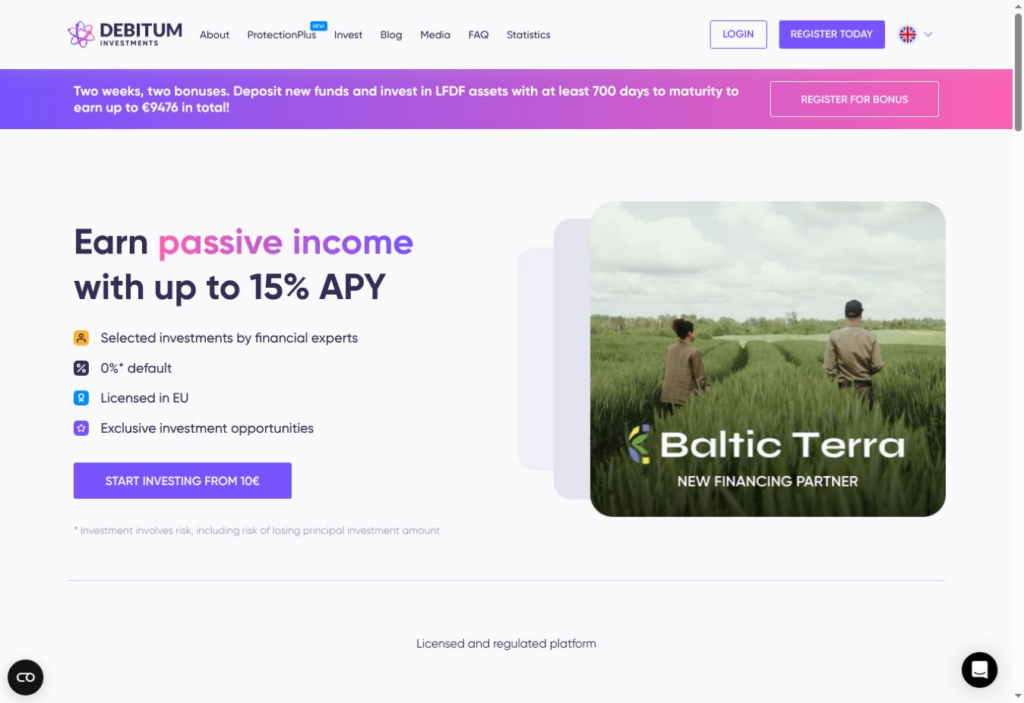
Key features of the platform: The relatively new loyalty programme and the opportunity to invest in agricultural land.
- Loyalty programme: Debitum’s new loyalty programme now replaces the previous cashback feature. Under this programme, investors receive an additional 0.5 per cent on top of the previous rate for investments of €6,000 or more. For investments of €25,000 or more, the interest rate increases by 1 per cent, and for €50,000 or more, it rises by as much as 2 per cent.
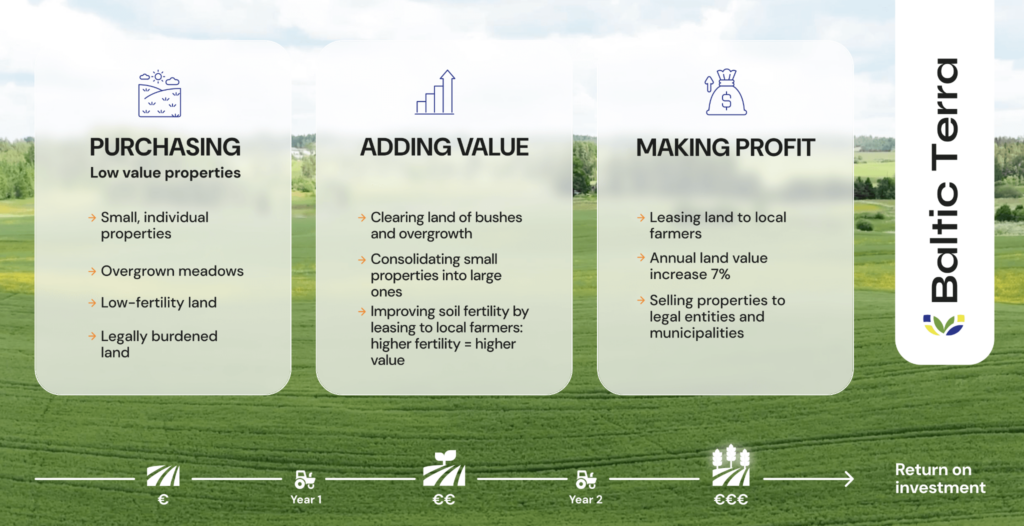
- Investments in agricultural land: Investors have recently been given the opportunity to invest in agricultural land as well as forests. To this end, the platform has secured Baltic Terra, a financing partner and issuer of bonds, as a partner.
This investment opportunity offers investors an even more diversified portfolio and supports Debitum’s aim of connecting investors with real-economy assets in order to generate sustainable returns.
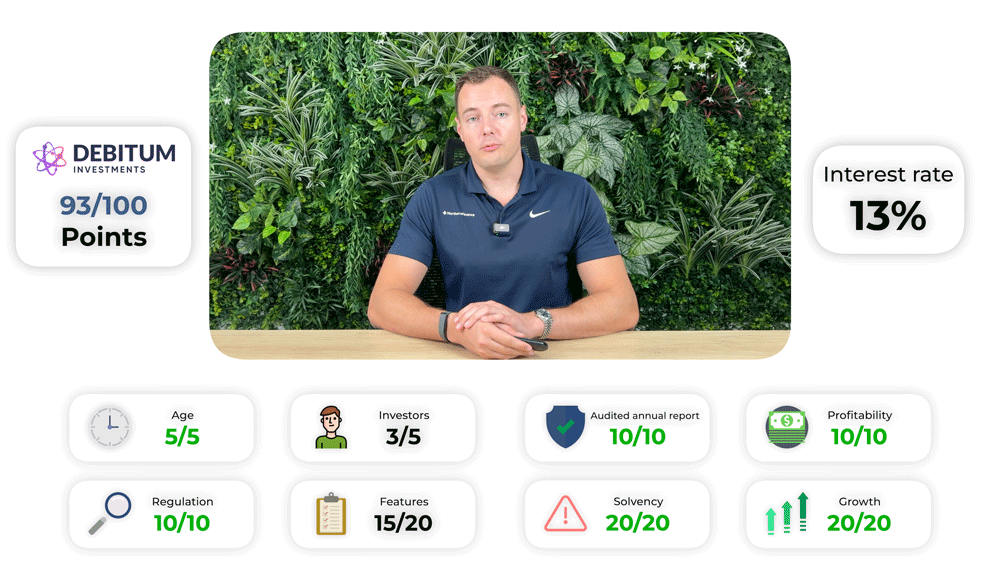
Debitum Investments was founded in 2018 and therefore scores full marks for age. However, with currently 34,000 investors, the platform only scores 3 out of a total of 5 points.
Audited annual accounts for 2025 are available and show a profit of €507,000 on page 12. This means it once again scores full marks for the criteria of annual accounts and profitability. The key lender, LFDF, also reports a strong profit of over €1.5 million. For me, this is a very important indicator when assessing profitability.
Since 2021, Debitum Investments has been fully licensed and is supervised by the Latvian Central Bank. With the exception of the secondary market, the platform offers all the key features. These features include:
- Auto-Invest
- Translations into several languages (German, English, Spanish)
- Tax report

However, Debitum Investments’ greatest strength lies in the solvency of the platform and its lenders. With the exception of one Ukrainian lender, there has been not a single default in the company’s entire history!
Overall, Debitum Investments scores 93 out of 100 points.
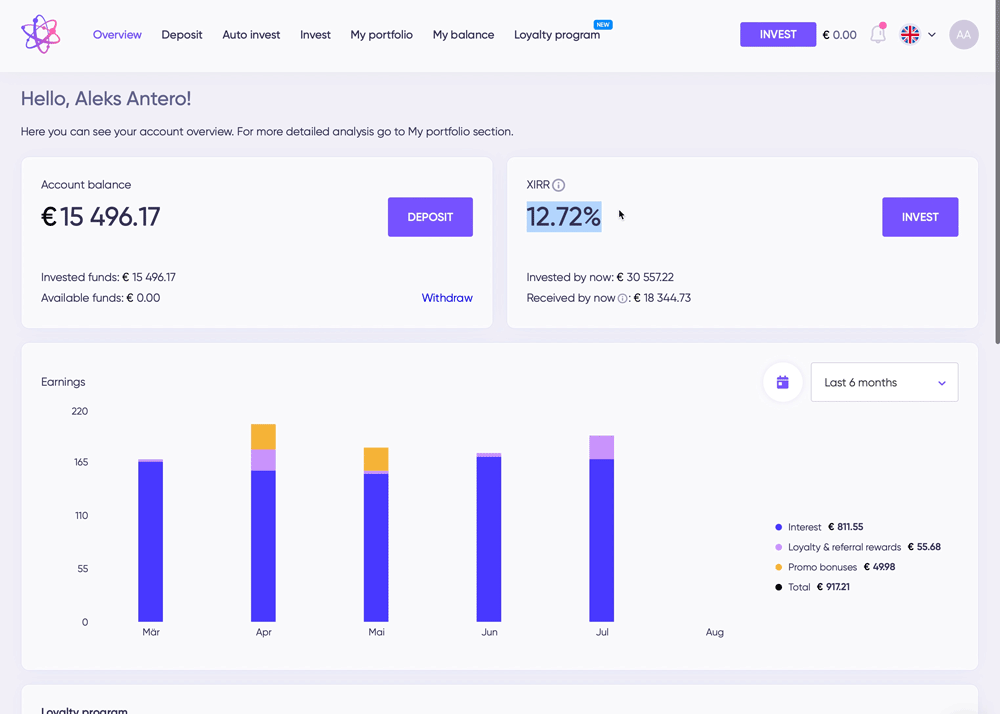
My portfolio with Debitum Investments is now worth over €15,000. I’m currently earning a considerable return of 12.72 per cent, which I’m very happy with. The platform is easy to use and I’ll continue to invest here in the future.
You can find more information about the platform in my Debitum review.
Platform 2: Go & Grow
Bondora’s Go & Grow platform is one of the absolute heavyweights in the European lending market and promises its investors up to 6 per cent interest per year on their consumer loans.
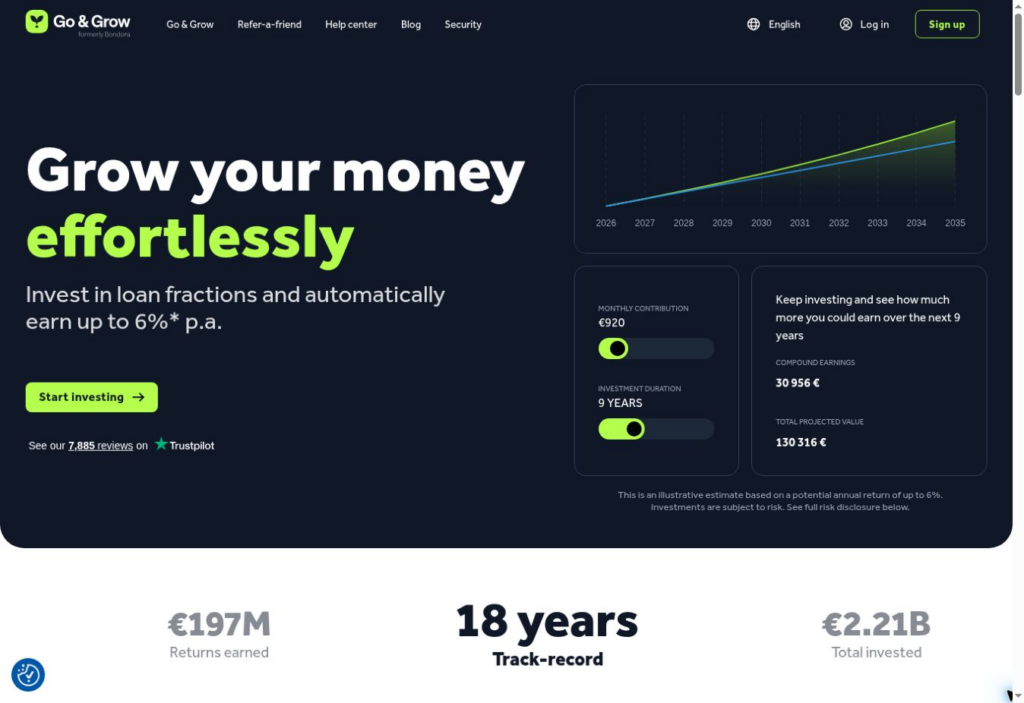
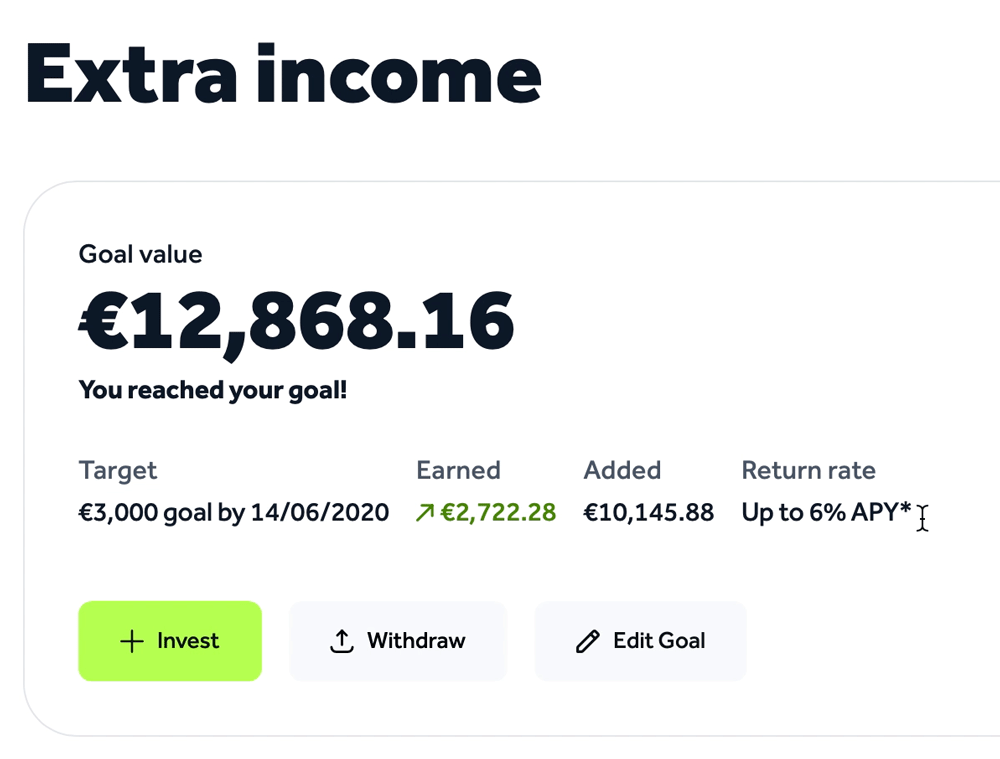
What makes the platform special: For some time now, there has been an exciting new feature for investors designed to help them invest: the Goals feature.
With the Goals feature, investors can structure their assets in a targeted way and build them up step by step. This allows them to set individual savings goals, name them as they wish, and track their progress transparently at any time.
Possible goals include, for example:
- Holidays
- Emergency fund
- New car
- Long-term wealth accumulation

The parent company, Bondora, was founded in 2008 and, with over 500,000 registered investors, is one of the largest P2P lending providers on the market.
Investors on Go & Grow invest in loans from:
- Estonia
- Latvia
- Finland
- Denmark
- the Netherlands
Payments to investors have always gone off without a hitch – with one minor exception during the coronavirus pandemic.
When it comes to payouts, the speed is particularly noteworthy, as the money lands in your current account within a few seconds – and has done so reliably for several years now.

The Bondora Group’s profit has soared from €1.2 million in 2024 to a whopping €9.5 million in 2025. Go & Grow therefore scores full marks on the first set of criteria.
When it comes to regulation, I award only 5 out of 10 points, because although Bondora’s lending business is regulated in the respective countries, Go & Grow as a platform is not regulated itself.
Overall, Go & Grow scores a strong 90 out of 100.
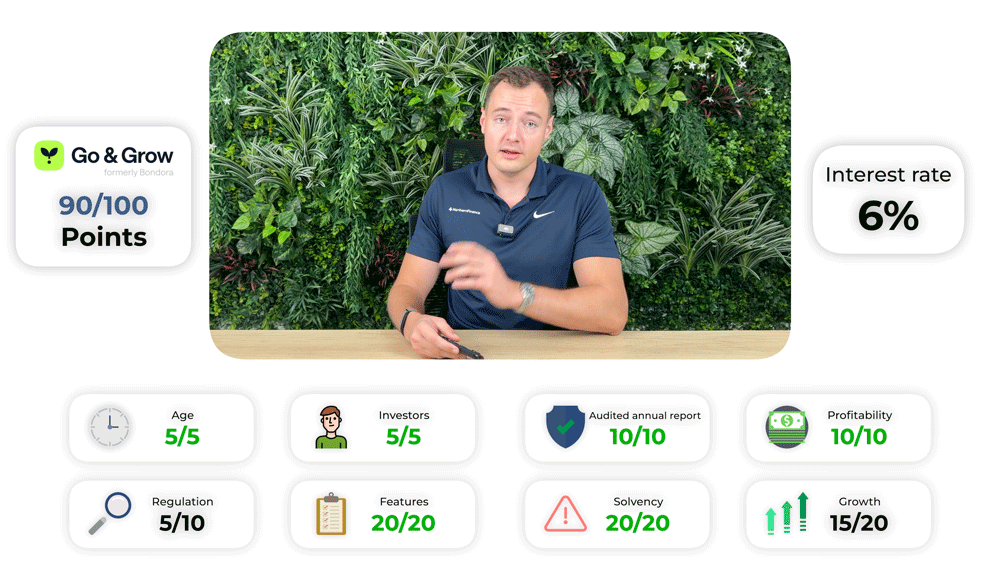
I’ve been investing with Go & Grow for many years now. My portfolio is currently worth just under €13,000.
You can read more about Bondora and the Go & Grow platform in my latest Bondora review.
Platform 3: Monefit SmartSaver
Monefit SmartSaver has arguably been the biggest growth story of late and is now regarded by many investors as a better choice than its direct competitor, Go & Grow.
With the basic product, investors receive up to 7.5% interest per annum, whilst the Vault product can yield up to 10.52% per annum.

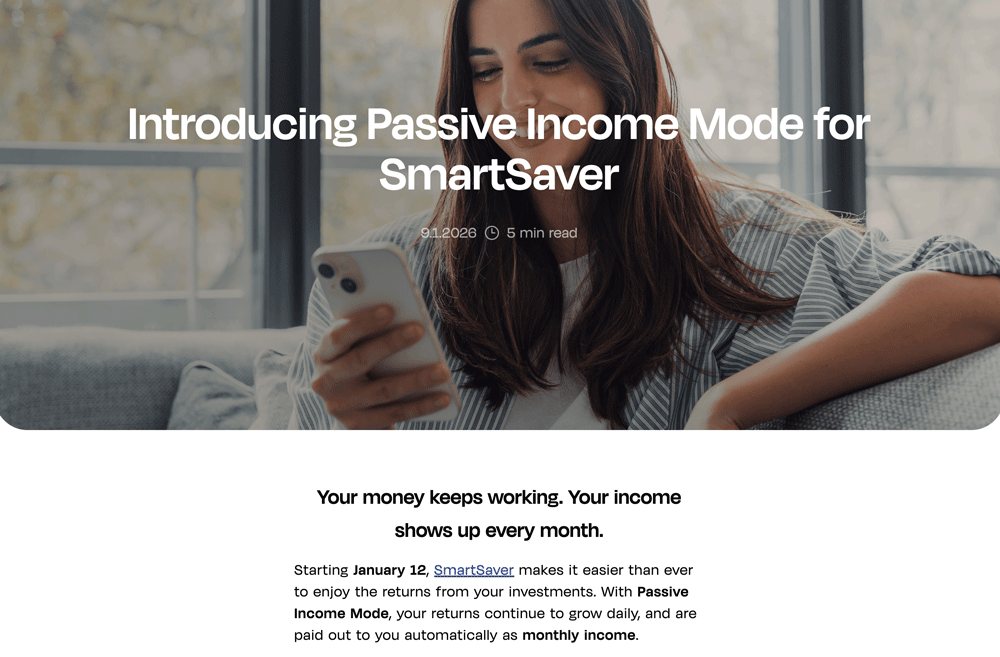
What makes the platform special: With its “Passive Income” feature, Monefit is a hit with all investors who want money transferred automatically into their account.
Here’s how the feature works:
- Your capital remains fully invested and continues to generate returns
- Returns continue to be generated daily
- On the 1st of each month, the returns generated in the previous month are automatically paid out
- You can have the money paid into your bank account or onto your registered card
- You can enable or disable this feature at any time
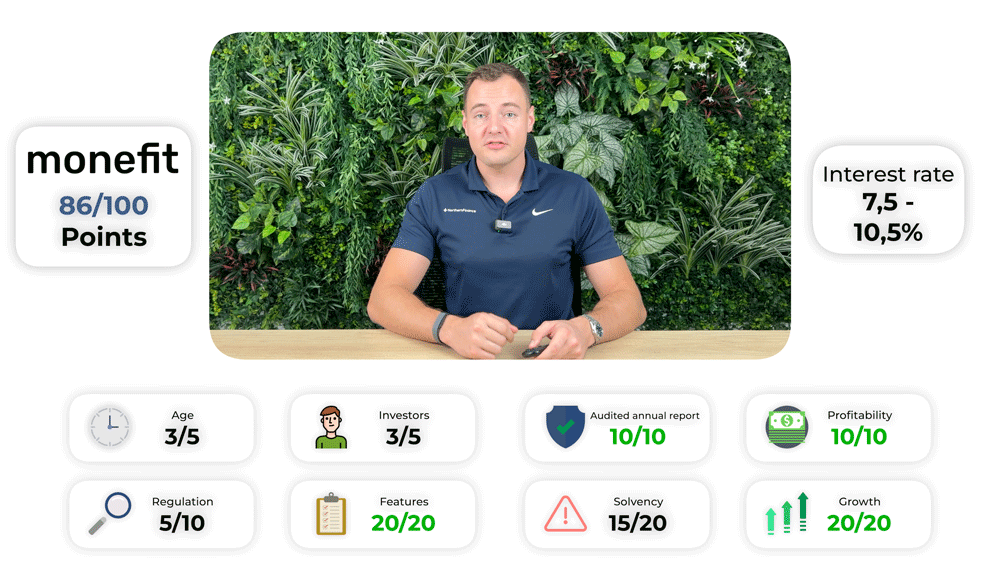
Monefit was founded in 2022 and, at just 3 years old, is relatively young. Nevertheless, the platform already has over 48,000 registered investors and continues to grow strongly.
The profit of the parent company, Creditsstar Group, has risen from €7.2 million in 2024 to €13.5 million in 2025. This represents remarkable growth for just one year and therefore a well-deserved 10 points for profitability.

As an investor, you can invest in loans from the following countries:
- Estonia
- Finland
- Sweden
- Denmark
- Poland
- Czech Republic
- Spain
- and the UK
Overall, Monefit scores an impressive 86 out of 100 points.
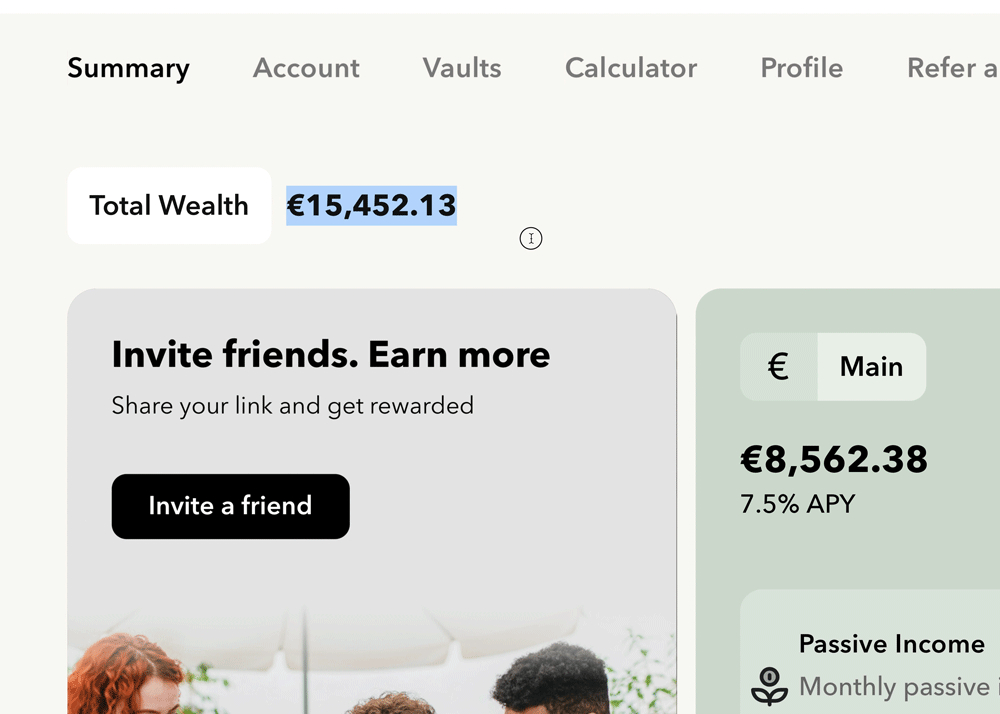
My own investment with Monefit now stands at over €15,000.
You can find out more about my experiences with Monefit SmartSaver in the latest comparison Monefit vs. Bondora.
Exclusive Northern Finance promotional Vault on Monefit
The new Monefit app for Android and iOS is finally available and, to mark the occasion, we’ve launched an exclusive promotion in partnership with Monefit.
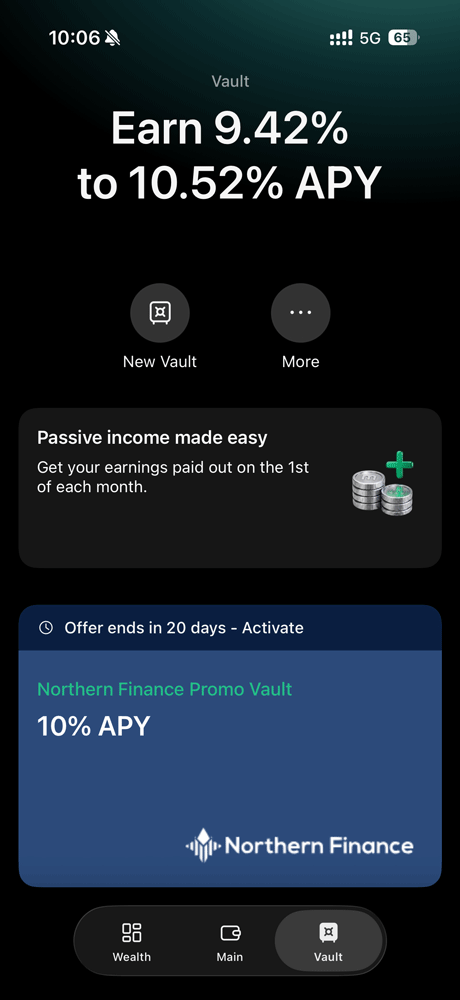
What are the benefits for you? It’s very simple: We’re increasing your interest rate for a 12-month Vault from 9.42% to 10% – with the exclusive “Northern Finance Vault”. As the name suggests, this is available exclusively to the Northern Finance community.
Here’s how to access the exclusive Northern Finance Vault:
- The 10% interest rate is reserved exclusively for the Northern Finance community.
- Click on the registration link. Only via this link will you be able to access the promotional Vault.
- In addition, you’ll receive a €5 bonus plus 0.5% on your investment during the first 90 days.
- This Vault pays out interest monthly, not daily.
- Important to note: the promotion is valid until 26 October.
Following requests from many investors, Monefit has now launched an app in addition to its web version.
You can easily find the Monefit app in the App Store and on Google Play. As it was only released a few days ago, there are no reviews available yet.
Once you’ve downloaded it, log in as usual with your credentials and you’ll be taken straight to the overview.
Good to know:
Set up two-factor authentication to provide extra protection for your account.
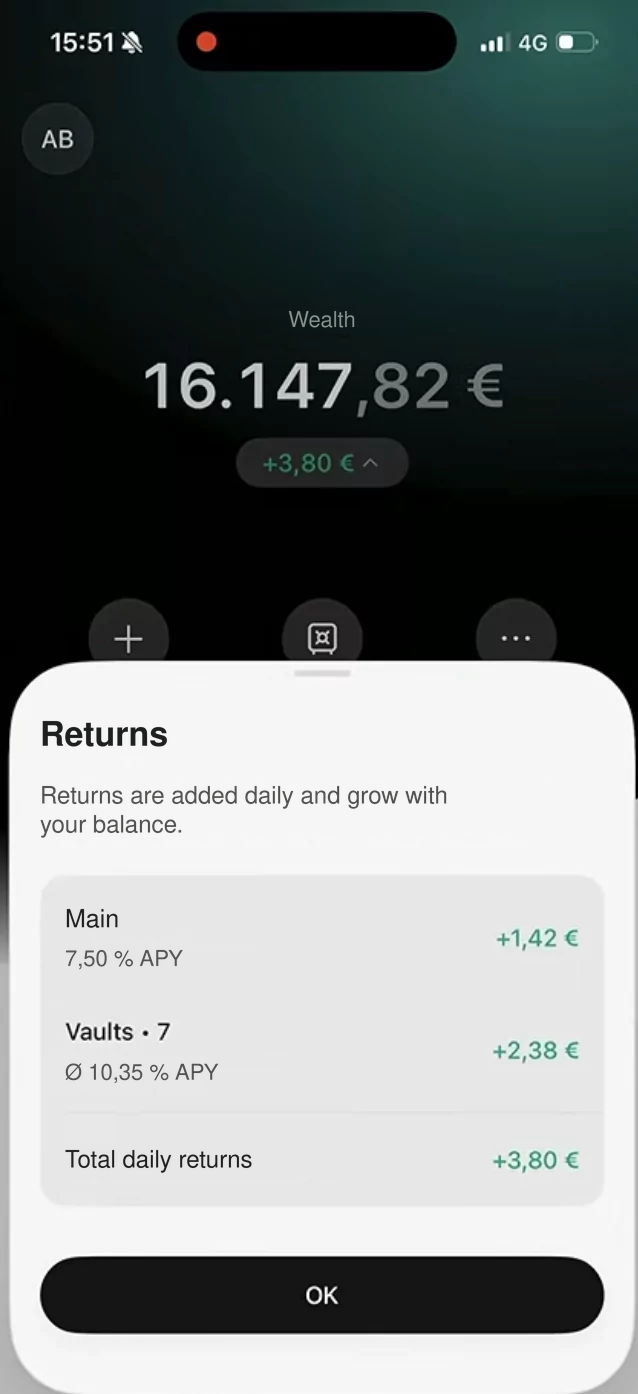
At first glance, the design of the new Monefit app is reminiscent of Revolut’s. This is definitely a positive aspect, as the app features a clear and modern layout.
It’s also handy that you can see not only the value of your deposit but also the daily interest. In my case, that’s €3.80 a day.
The features you’re used to, such as ‘Passive Income’ and ‘Auto-Invest’, are also accessible with just a few clicks. You can also easily adjust the amount you want to invest monthly via Auto-Invest using the app.
It’s also particularly handy to be able to make your withdrawals directly from the ‘Main Account’ tab. Tax statements, however, aren’t yet accessible via the app. For the time being, you still need to download them via the web version.
I can’t wait to see how the app develops in the future, and I’m proud to be the first YouTuber and blogger to have entered into an exclusive partnership with Monefit.
The bonus is available until 26 October. So make sure you claim it today!
Platform 4: Afranga
The Afranga platform offers investors Bulgarian consumer loans with an interest rate of 8–16 per cent. The term is either 3 years or, with the flexible product, between 3 and 12 months.
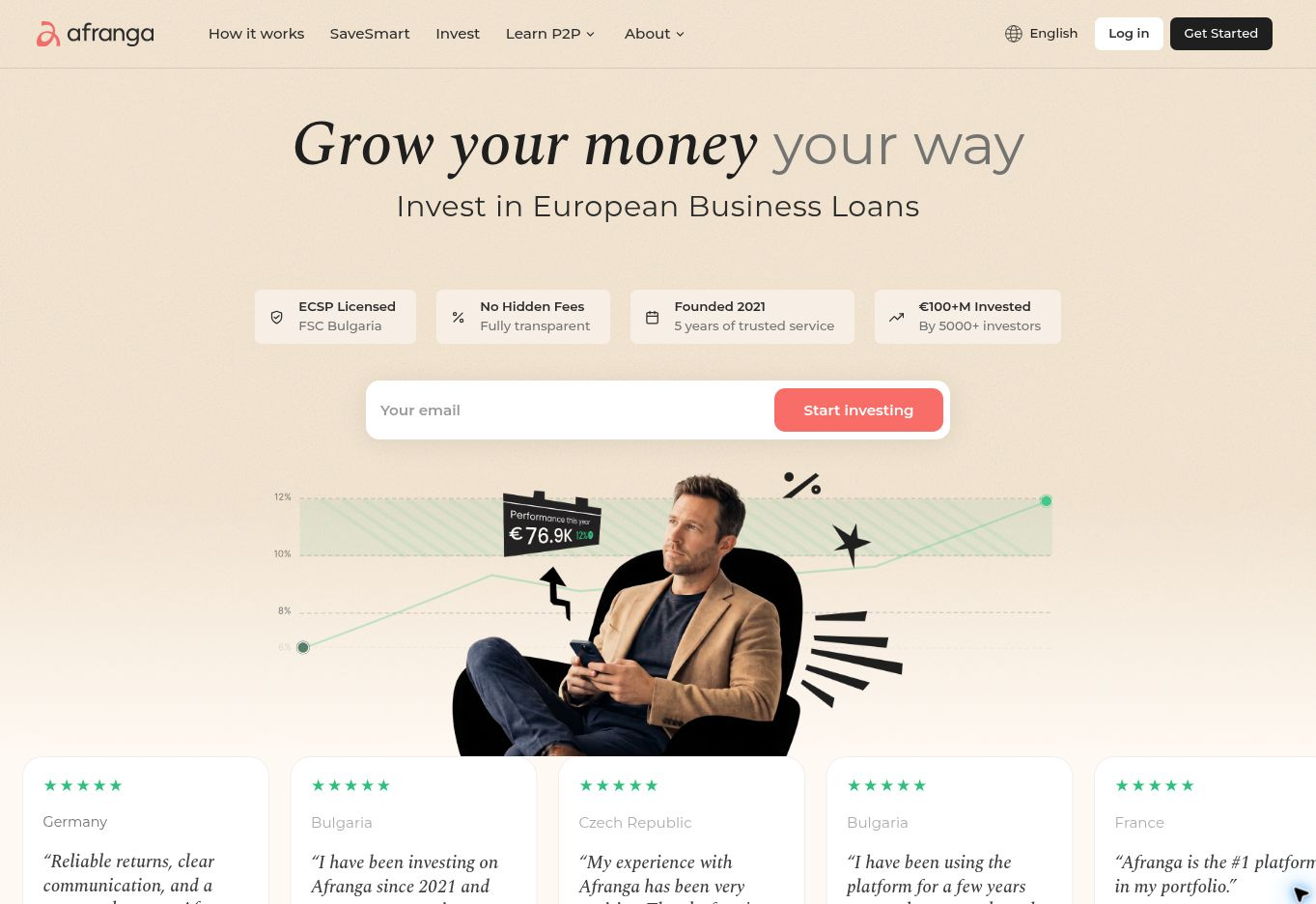
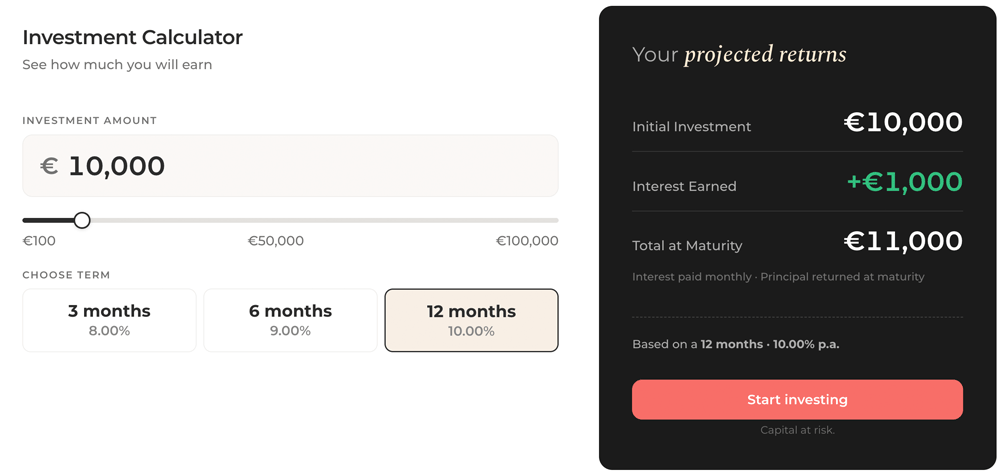
Key features of the platform: With the SaveSmart feature, afranga offers investors the opportunity to make a fixed-interest investment with a fixed term.
How the feature works:
- Investors receive returns of approx. 8% (3 months), 9% (6 months) and 10% (12 months).
- Interest is paid out monthly
- The capital can be automatically reinvested upon maturity
- Investments are made either in corporate loans or property loans
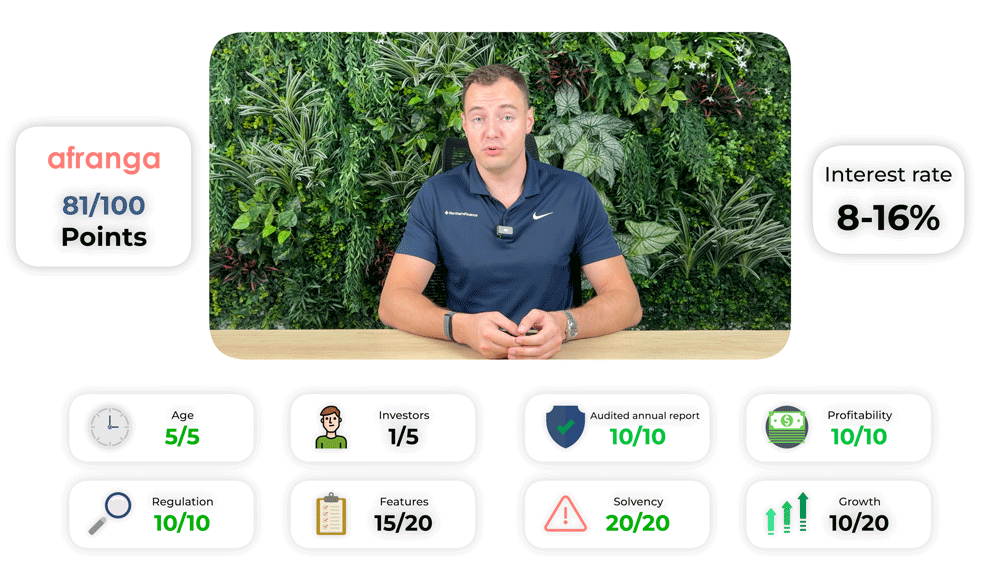
Afranga was founded in 2021 and therefore already has several years’ experience in the market. However, with 5,000 investors, the platform has hardly grown in recent years, which is why it scores only 1 out of 5 points in this category.
Last year saw a major relaunch of the platform. The largest lender also provides up-to-date profitability figures as well as an audited annual report for 2025, which shows a profit of €2.2 million.

Afranga is regulated as a crowdfunding service provider, as are its borrowers. Investors also have a wide range of features to choose from. However, there is no secondary market. This means that loans cannot be sold early, which could be a drawback for some investors who value flexibility.
There have been no loan defaults on Afranga to date, and even during the 2021/22 coronavirus pandemic, the main lender, Stikcredit, consistently generated reliable profits – full marks.
I therefore award Afranga 81 out of a possible 100 points.
I am currently earning around 14 per cent interest on my investment with afranga, which is spread across the two largest loan originators, Stikcredit and Lendivo.

You can find out more about the platform and my personal experiences with it in my afranga review.
Platform 5: Mintos
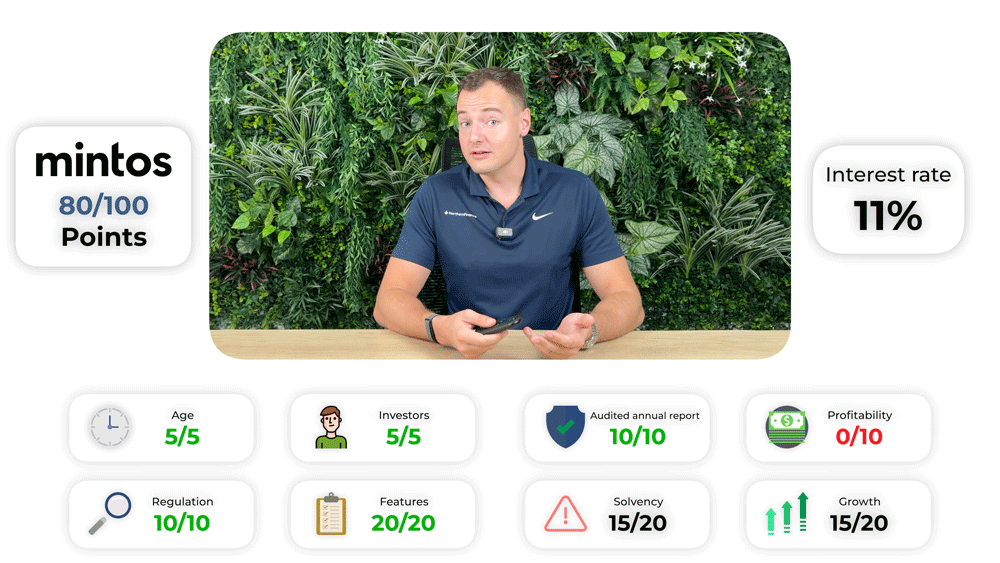
Europe’s largest platform enables its investors to invest in loans, bonds, ETFs and property. Investors currently receive an average of up to 11% interest per annum on investments in P2P loans.

What makes the platform special: Mintos is particularly appealing to yield-oriented investors who are prepared to accept a slightly higher level of risk. On Mintos, investors currently receive an average interest rate of 10.84 per cent. The historical average since 2015 is also certainly impressive at 8.8 per cent.
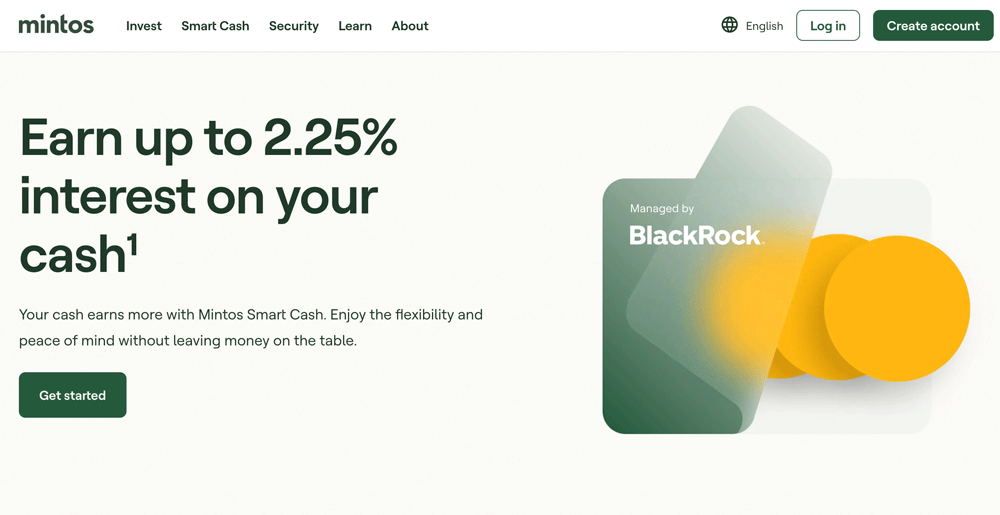
In addition, Mintos offers another exciting product: ‘Smart Cash’. With this, funds are invested via a money market fund, enabling investors to currently earn relatively low-risk interest income whilst retaining flexible access to their capital.
Mintos was founded in 2014, has over 700,000 registered users and manages more than €800 million. It therefore scores full marks for the first criteria.
The annual accounts have also been audited. However, these once again show a loss. Last year, the loss amounted to €2.2 million, which is why I have to award 0 points for profitability.

Mintos is regulated and is also highly impressive in terms of features. The P2P platform also performs well in terms of solvency. Although there were several loan defaults during COVID and the war in Ukraine, Mintos has nevertheless managed to recover the money efficiently – even if this can sometimes take several years.
Overall, Mintos scores a solid 80 out of 100 points.
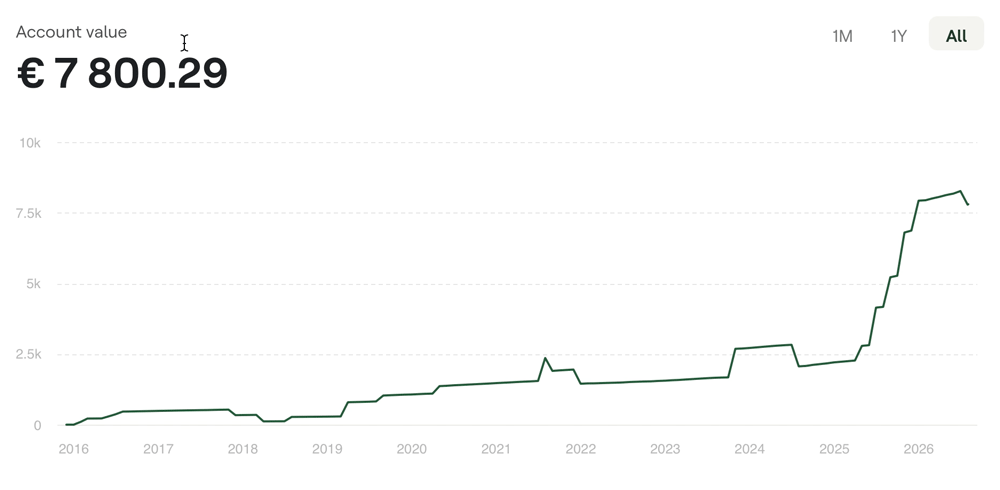
I’ve also invested in Mintos. However, the ongoing losses are gradually starting to worry me.
If the platform doesn’t manage to turn things round in the near future, I’ll have to think carefully about whether I want to continue investing here. I currently have €7,800 invested.
Claim your Mintos bonus here and find out more about this popular P2P platform.
Platform 6: TWINO
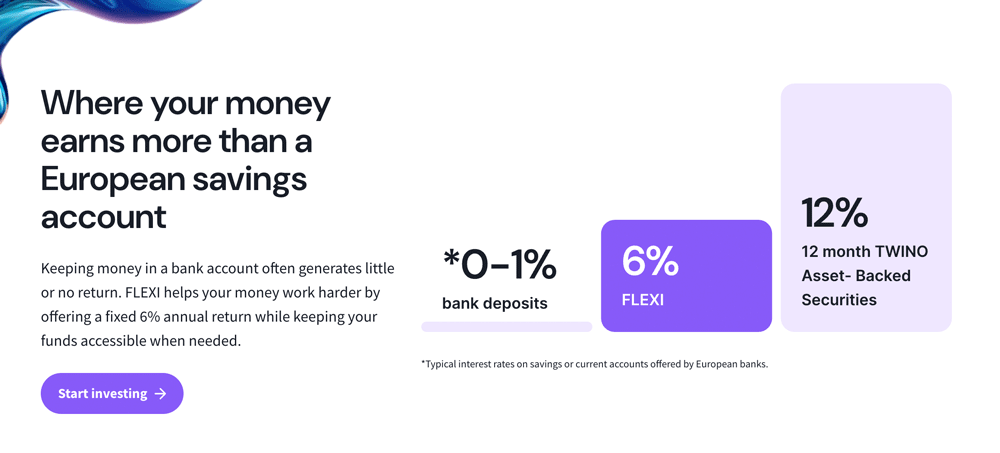
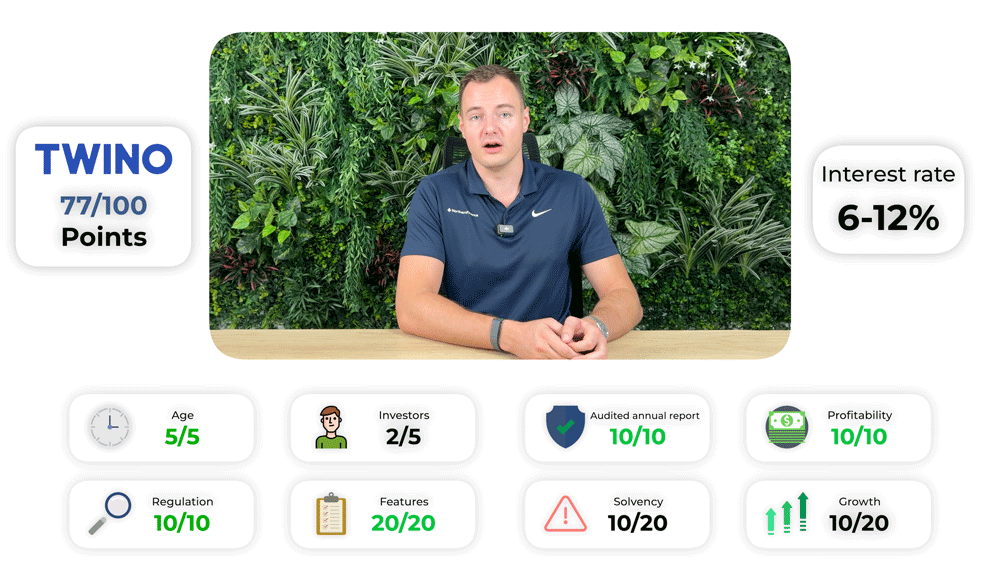
With the P2P lending platform TWINO, investors put their money into consumer loans from Poland, which yield interest rates of between 6 per cent and 12 per cent per annum.
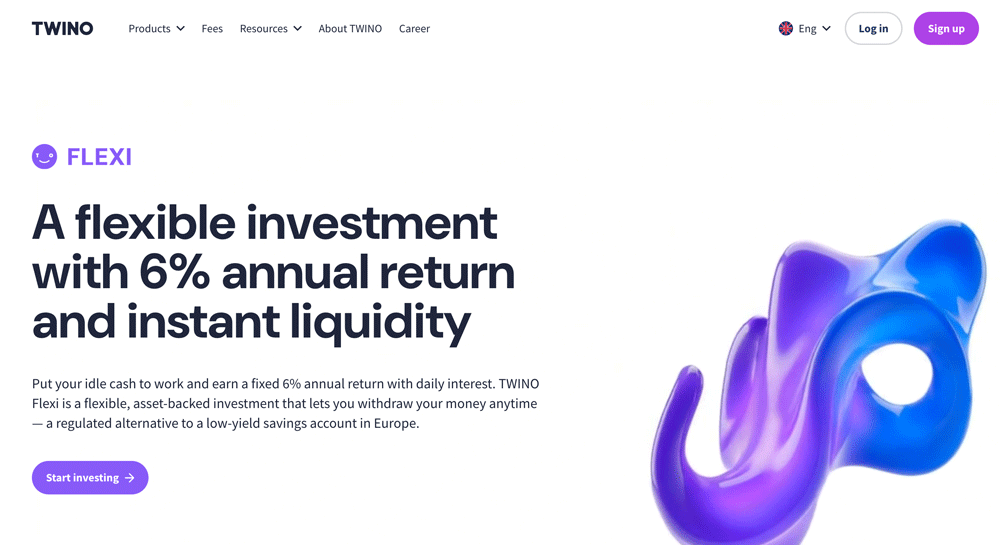
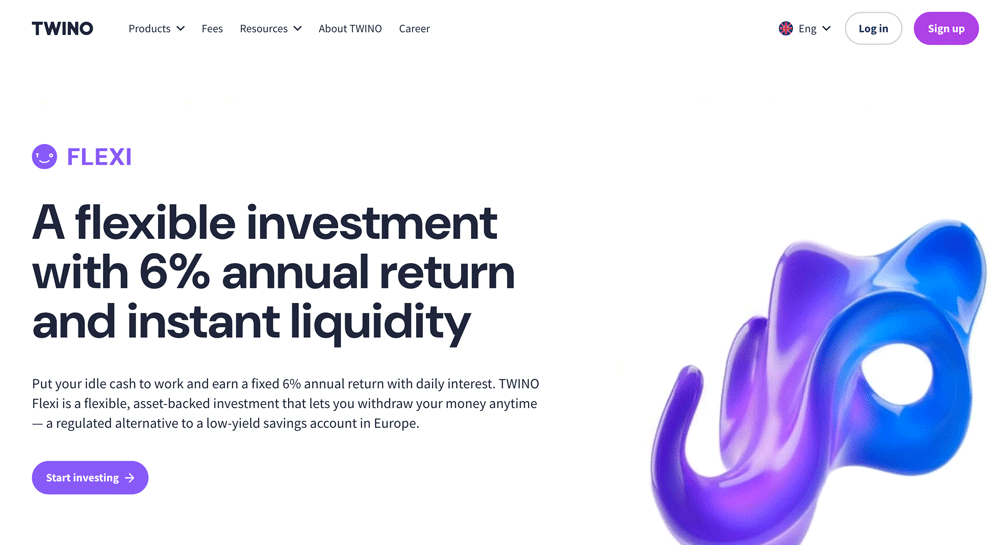
Key features of the platform: With TWINO FLEXI, the P2P lending provider has created a product that is particularly well-suited to investors who value a fixed rate of return and wish to calculate their returns more accurately.
With FLEXI, investors receive a fixed annual return of 6 per cent, whilst their money remains fully accessible. This sets TWINO FLEXI apart from P2P platforms such as Go & Grow, which also offer 6 per cent interest. However, these P2P lending providers offer a target return rather than a fixed interest rate, as is the case with TWINO.
TWINO is one of the oldest P2P platforms on the market. The company was founded back in 2015, but has never experienced explosive growth. There are currently 22,000 investors registered on the platform.
It is particularly worth noting that both TWINO and its Polish lenders have audited annual accounts and are profitable. Fincard made a profit of over €10 million in 2025, whilst TWINO itself made only €92,000.
For me, however, this is less of a cause for concern, as the platform primarily finances the highly profitable business of its lenders.
Both the TWINO platform and the local lenders are regulated. TWINO is regulated by the Central Bank of Latvia and, most recently, by the EU crypto regulation MiCA. It will be interesting to see what else unfolds here in the future.
Numerous features, such as the secondary market and translations into various languages, are available. With regard to solvency, there have been problems in the past with the financing of loans in Vietnam and the Philippines. On this point, therefore, it scores only 10 out of 20 points.
Overall, TWINO thus scores a good 77 out of 100 points.
I currently have just under €2,500 invested with TWINO and will probably expand my portfolio.
Click here for my detailed comparison of TWINO FLEXI vs. Bondora Go & Grow.
Platform 7: LANDE
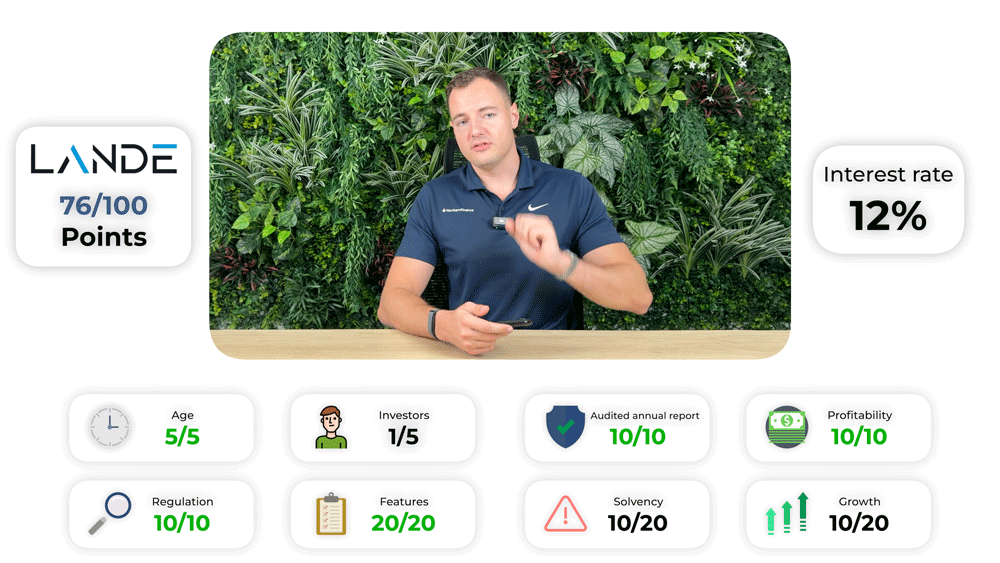
Since 2019, LANDE has been offering retail investors the opportunity to invest in agricultural loans from Latvia, Lithuania, Poland and Romania, whilst earning 9–18 per cent returns per year.
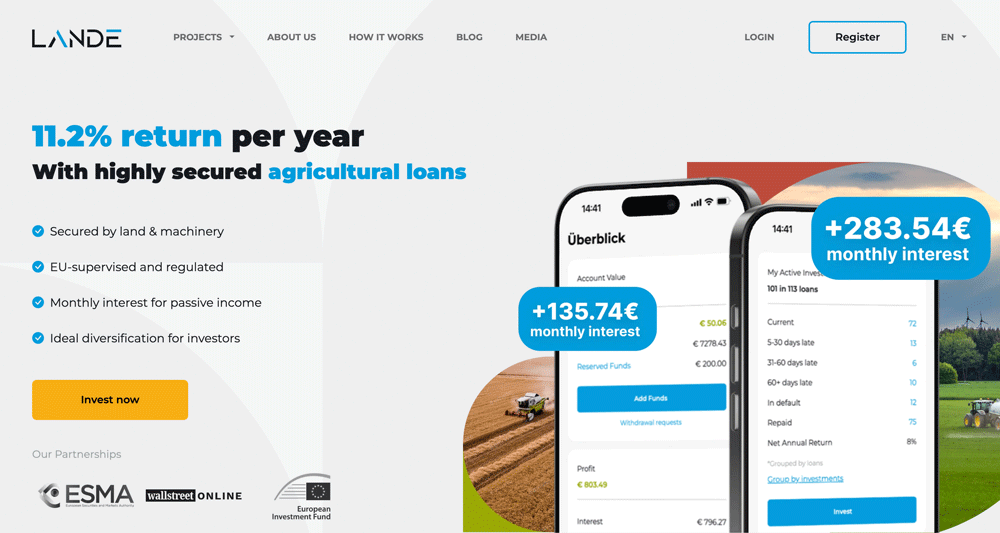
Key features of the platform: Loans on LANDE are secured against tangible assets such as land, machinery, crops or livestock. As a result, the risk profile differs significantly from that of unsecured financing.
Furthermore, the agricultural sector receives long-term support within the European Union. The long-term importance of and support for the agricultural sector within the EU creates an attractive environment for agricultural financing.
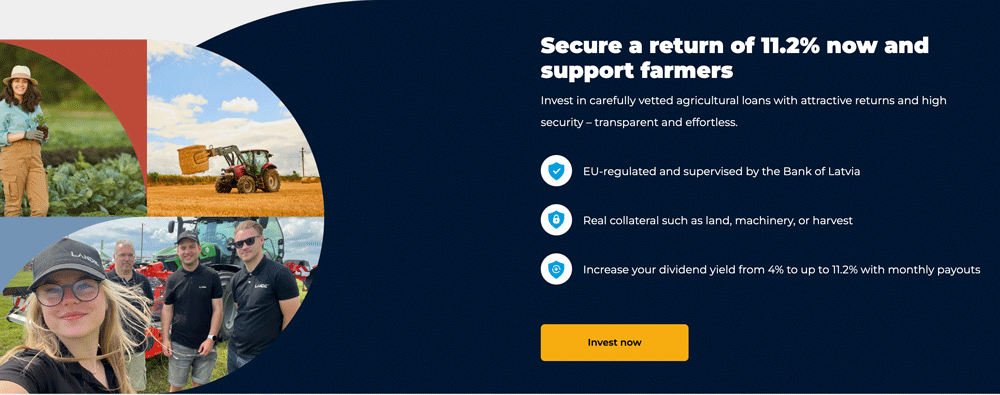
Audited annual accounts for the company are available, and these show a profit of around €250,000. In terms of solvency and growth, LANDE has recovered well recently, scoring 10 out of 20 points in each category.
Furthermore, LANDE is regulated and also scores full marks for its features. This brings LANDE’s total to 76 points out of a possible 100.
However, I see significant potential for further improvement here in the future, provided the current successful trajectory continues.
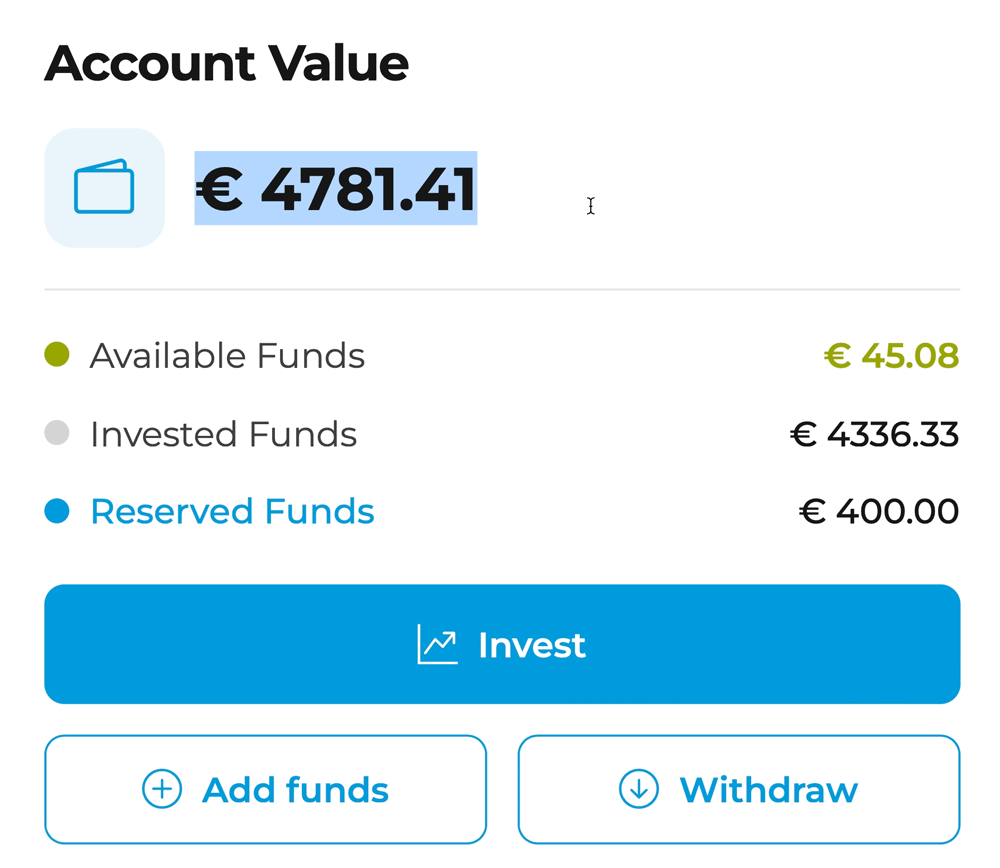
Having received the exclusive figures on the performance of the loan portfolio, I am investing with LANDE again. However, I am now only investing in loans that are secured against land, as these have performed best in the past.
Have a look at my LANDE review if you’d like to find out more about the platform.
Platform 8: Viainvest
The platform, founded in 2016, offers investors consumer loans from the Viainvest Group itself, with interest rates of up to 13 per cent per annum and terms of 6–12 months.
Key features of the platform: What makes Viainvest unique is probably the combination of regulated securities backed by pools of consumer loans, together with the buyback obligation.
With these investments, the lender is obliged to buy back a loan if the borrower fails to make a payment for more than 60 days.
As an investor, you can invest in loans from the following countries:
- Latvia
- Sweden
- Czech Republic
- Romania
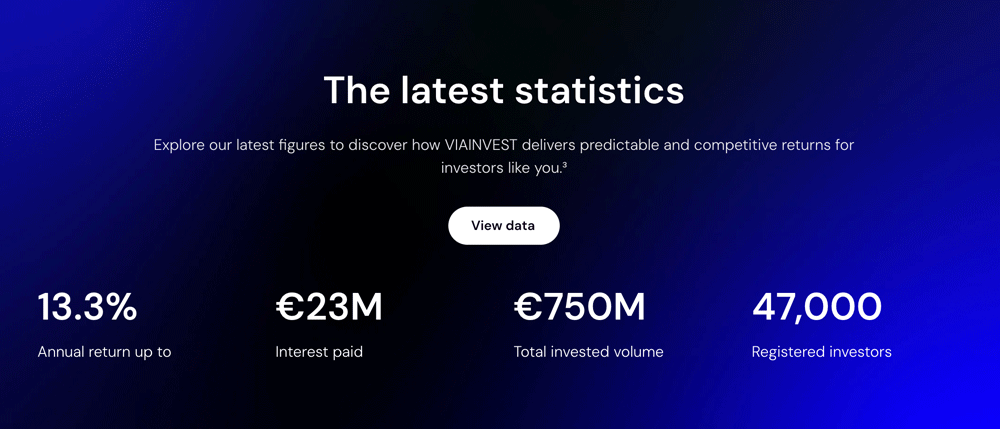
The number of investors has recently been on the decline. There are currently 47,000 users registered with Viainvest, which is why this criterion is awarded 4 out of 5 points.
The platform has also seen a decline in the volume of loans funded: from €19 million in December 2025 to just €11.6 million in July 2026.
Furthermore, as things stand, there are still no annual accounts available. In my view, this is absolutely unacceptable for such a large platform. For this reason, it scores 0 points for both annual accounts and profitability. I find it incomprehensible why Viainvest takes so long to provide investors with the key figures.
Viainvest is regulated, but offers only a few features: no secondary market and no foreign-language translations. It therefore scores just 10 points here. However, repayments have always gone smoothly in the past.
This brings Viainvest’s total to 64 out of 100 points.
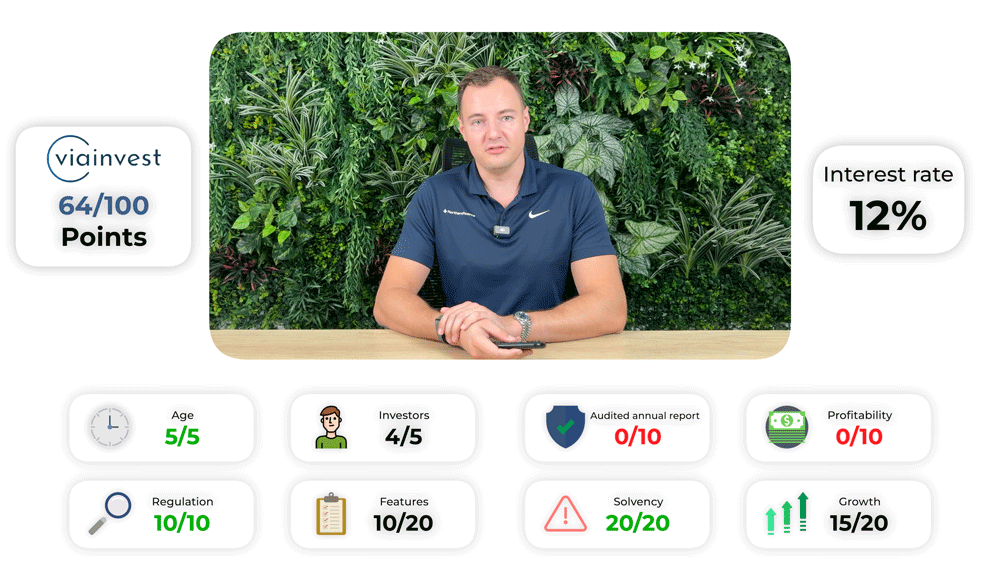
I currently have just under €6,700 invested with Viainvest. Due to the lack of transparency, I will not be increasing my investment here. Should the current interest rate of 12 per cent fall, I will withdraw my investment entirely. As far as I’m concerned, Viainvest is currently a long way from being the best P2P platform.

In my Viainvest review, I go into detail about the platform and the pros and cons for investors.
Platform 9: Loanch
On the P2P platform Loanch, investors do not invest in European P2P loans, but in loans from Malaysia, for which they receive up to 15.9 per cent interest.
The largest lender, Tambadana, has its headquarters in Kuala Lumpur, where I was able to get a first-hand look at the company.
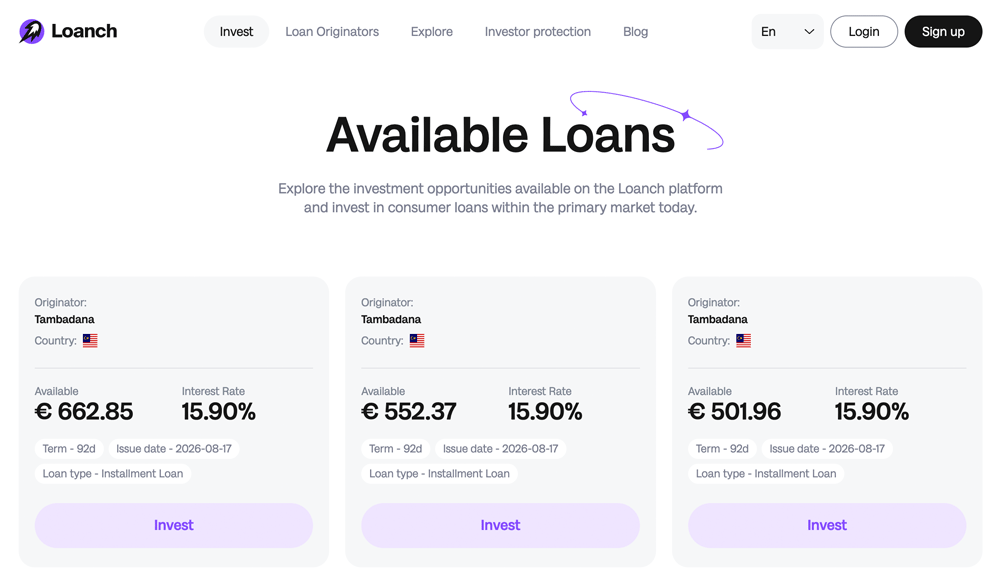
What makes the platform special: What makes Loanch unique is the geographical focus of the P2P platform. By concentrating on South-East Asia, the P2P lending provider is targeting a market that has often been neglected in the past. This market is particularly exciting as it has great potential for strong economic growth and demand for loans is also high.

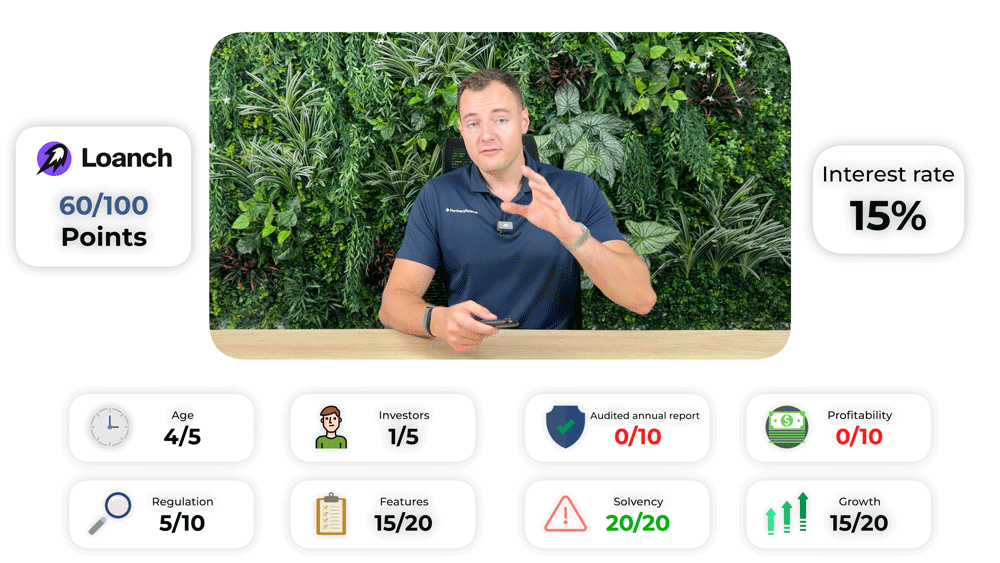
The company was founded in 2022, but it took some time to set up the platform. In 2024, however, it was finally able to launch and welcome its first investors. There are currently 15,000 investors registered on the P2P platform.
Since then, Loanch has experienced dramatic growth: Within just 12 months, the platform scaled its loan portfolio from around €6 million to just under €30 million. This now generates a profit of over €1 million per month.

Unfortunately, however, there are currently no audited annual accounts available and therefore no audited figures on profitability.
The lenders are regulated, but Loanch itself, as a marketplace, is not; this is why it scores only 5 out of 10 points here.
The platform scores highly with numerous features such as an auto-invest function, multilingual support and a tax report. There have also been no payment issues on Loanch to date.
Despite its strong growth, Loanch currently scores only 60 out of 100 points due to a lack of transparency.
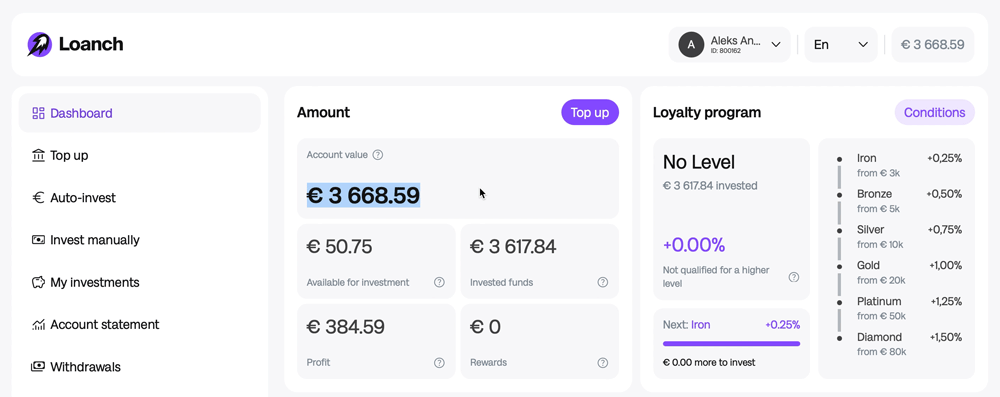
I currently have around €2,500 invested in Loanch.
You can find out more about this P2P lending platform in my Loanch review.
Platform 10: FF Forest
In the P2P comparison, FF Forest is one of the newcomers to the market. As the name suggests, investors here finance forests, which are purchased and resold as a bundled package to private equity firms. This currently offers interest rates of up to 15 per cent.

What makes the platform unique: FF Forest is unique because investors invest directly in forest land and forestry, thereby financing a tangible asset rather than traditional P2P loans.
Returns are generated through tree growth, the sale of timber and potential increases in the value of the forest land. Furthermore, FF Forest utilises technology-driven forest analysis and site selection.

The P2P platform only launched in 2024 and is currently unable to provide any audited annual accounts. Nor does it have any regulatory approval or special features.

However, FF Forest scores highly with a secondary market via the ‘Early Exit’ feature and very rapid growth. So far, all interest payments have been credited and paid out on time as cash into investors’ accounts.
Due to its short history, FF Forest scores 47 out of 100 points in this year’s P2P comparison.
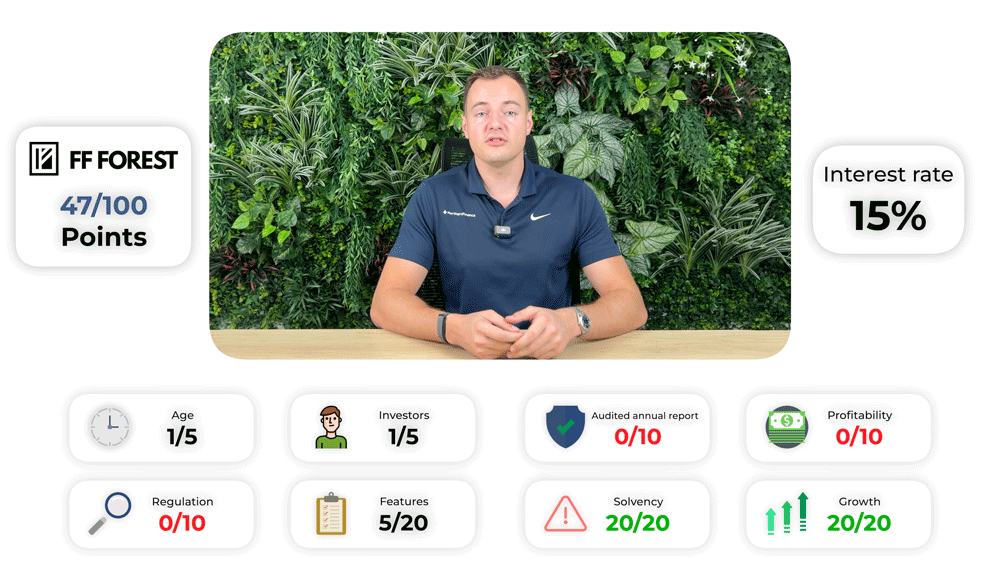
Although FF Forest is still a very new and inexperienced platform, I find its business model extremely exciting. I have therefore invested €5,300 myself and will be keeping a close eye on how this P2P provider develops.

You can find out more about this newcomer in my FF Forest review.
Conclusion: Even the safest platforms carry risks
As in the first half of 2026, first place goes deservedly to Debitum with an impressive 93 points. The platform offers solid interest rates and performs very strongly overall. Close behind, with 90 points, is the long-standing player Go & Grow, followed by Monefit SmartSaver in third place.
I feel most comfortable with these top 3 and have therefore invested the most by far.
Viainvest takes 8th place with a total of 64 points. That’s a shame, as in my view the platform could have achieved so much more. Bringing up the rear are Loanch with 60 points and the newcomer FF Forest with 47 points.
The ranking is, of course, not set in stone and is merely intended to give you a guide so that you can decide for yourself which is the best P2P platform. One thing is certain: there’s something for every type of investor.
| Age > 5 years | Investors > 50,000 | Audited annual report | Profitability | Regulation | Feautures | Solvency / Defaults | Growth + Latest Developments | Total | Current interest rates | |
| Debitum | 5 | 3 | 10 | 10 | 10 | 15 | 20 | 20 | 93 | 13% |
| Go & Grow | 5 | 5 | 10 | 10 | 5 | 20 | 20 | 15 | 90 | 6% |
| Monefit | 3 | 3 | 10 | 10 | 5 | 20 | 15 | 20 | 86 | 7,5 – 10,5 % |
| Afranga | 5 | 1 | 10 | 10 | 10 | 15 | 20 | 10 | 81 | 8–16% |
| Mintos | 5 | 5 | 10 | 0 | 10 | 20 | 15 | 15 | 80 | 11% |
| TWINO | 5 | 2 | 10 | 10 | 10 | 20 | 10 | 10 | 77 | 6–12% |
| LANDE | 5 | 1 | 10 | 10 | 10 | 20 | 10 | 10 | 76 | 12% |
| Viainvest | 5 | 4 | 0 | 0 | 10 | 10 | 20 | 15 | 64 | 12% |
| Loanch | 4 | 1 | 0 | 0 | 5 | 15 | 20 | 15 | 60 | 15% |
| FF Forest | 1 | 1 | 0 | 0 | 0 | 5 | 20 | 20 | 47 | 15% |
FAQ: Which P2P platform will be the most secure in 2026?

